
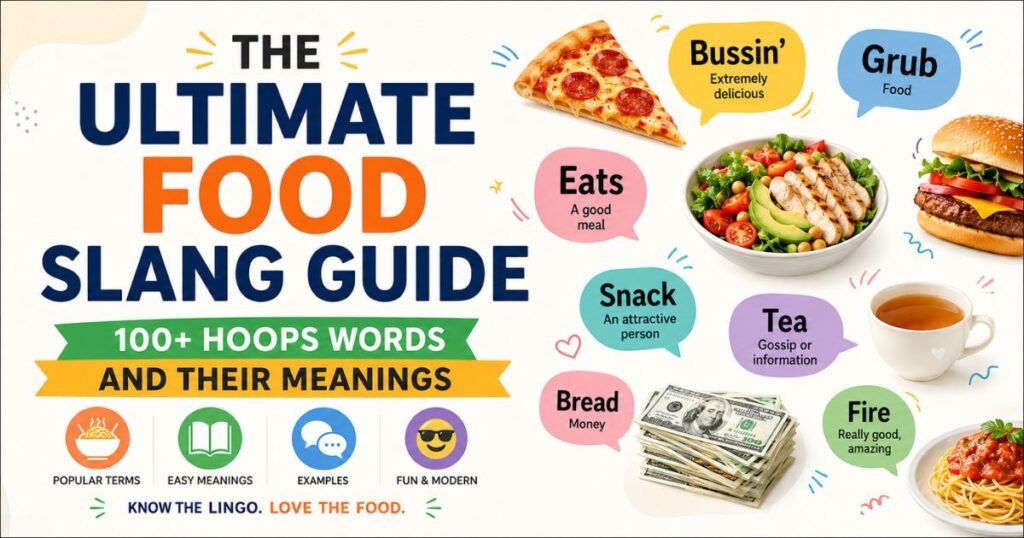
Food has its own language, and half of it has nothing to do with actual eating. From calling someone a snack to saying a meal absolutely slaps, food-related slang shows up everywhere in texting, social media, and casual conversation.
This guide breaks down the most common food slang words, explains what they really mean, and shows how to use them naturally without sounding forced or outdated.
What Is Food Slang
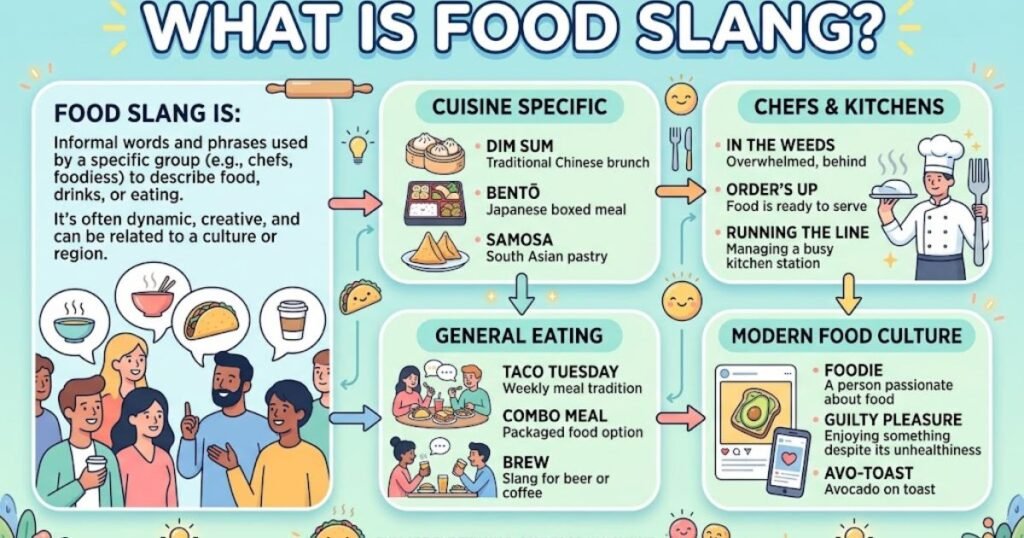
Food slang includes informal words that describe food itself, along with food-based expressions used to describe people, money, emotions, conflict, and everyday situations. Some terms are purely literal, like calling food grub, while others borrow food imagery to describe something entirely unrelated to eating, like calling money bread.
- Some terms describe food directly
- Others describe people or attractiveness
- Some describe emotions or reactions
- Many originated decades ago and simply evolved over time
Read more What Does FRLS Mean in Text?
Slang Words for Food
These terms are simple, casual replacements for the word food itself.
| Slang Word | Meaning |
| Grub | Food in general |
| Eats | Food or a meal |
| Chow | Food, often used as a verb too |
| Nosh | A small meal or snack |
| Munchies | Cravings for snack food |
| Bites | Small portions of food |
| Vittles | An old-fashioned word for food |
| Feed | A meal, especially a large one |
Examples:
- “Let’s grab some grub after work.”
- “Where are the good eats around here.”
- “Time to chow down.”
Slang for Delicious or Really Good Food
When food tastes especially good, several casual expressions capture that reaction better than simply saying delicious.
- Bussin’ means extremely tasty or satisfying
- Fire describes something excellent or impressive
- Slaps means the food is really enjoyable
- Hits different implies the food tastes unexpectedly good
- Chef’s kiss signals something is perfectly done
“This burger is bussin'” and “these wings are fire” are both common ways to hype up a meal in casual conversation.
Gen Z Food Slang You Will See Online
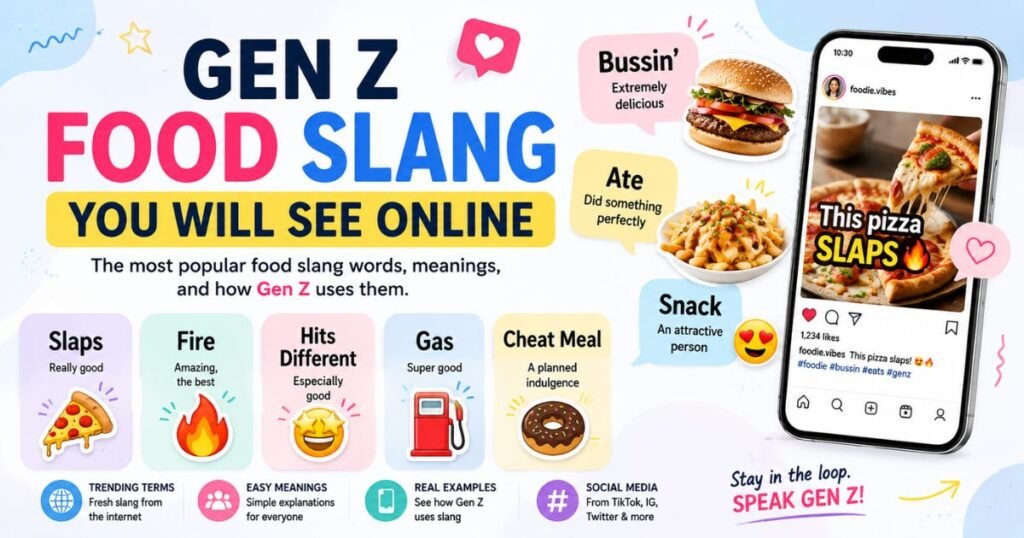
Younger internet users have added their own layer of food language, often blending humor with exaggeration.
- Bussin’ for something extremely delicious
- Ate for doing something impressively well, food-related or not
- Slaps for a meal that tastes great
- Girl dinner for a small, random meal thrown together
- Food coma for the sleepy feeling after eating too much
- Let him cook or let her cook for allowing someone to keep going with what they are doing
This slang spreads quickly through short-form video platforms and often blends food talk with broader internet culture.
Food Slang That Means More Than Food
Some of the most interesting food slang has nothing to do with actual eating.
| Term | Real Meaning |
| Snack | An attractive person |
| Bread | Money |
| Tea | Gossip or information |
| Sauce | Style or confidence |
| Beef | Conflict or disagreement |
| Salty | Upset or bitter |
| Spicy | Bold, exciting, or controversial |
| Cooked | In trouble or finished |
| Juicy | Interesting or full of detail |
| Cheesy | Overly sentimental or corny |
These metaphorical meanings are just as common as literal food slang, especially in casual texting and social media comments.
Funny Food Slang and Expressions
Food has inspired plenty of playful expressions that blend humor with everyday meaning.
- Nacho business, meaning it is not your concern
- In a pickle, meaning stuck in a difficult situation
- Spill the tea, meaning share the gossip
- Bring home the bacon, meaning earn income
- Piece of cake, meaning something easy
- Full of beans, meaning energetic
- Egg on your face, meaning embarrassed
- Butter someone up, meaning to flatter them
- That’s the way the cookie crumbles, meaning that is simply how things turned out
Slang for Eating and Being Hungry
These expressions describe the act of eating or the feeling of hunger.
- Chow down
- Grab a bite
- Dig in
- Pig out
- Have the munchies
- Grab some grub
- Have a nosh
Example: “I’m starving, let’s dig in before it gets cold.”
Slang for Snacks and Small Meals
Snacking has its own casual vocabulary that fits naturally into everyday conversation.
- Munchies
- Bites
- Nosh
- Snack attack
- Girl dinner
- Grazing
Example: “I’ve just been grazing all afternoon instead of eating a real meal.”
Food Slang for Complimenting a Meal
When something tastes great, casual language often does the job better than formal praise.
- “This is bussin’.”
- “This slaps.”
- “This is fire.”
- “Chef’s kiss.”
- “Hits are different.”
- “Worth every calorie.”
Food Slang for Money, Drama, and Everyday Life
Food metaphors extend naturally into money, conflict, and daily social situations.
- Bread and cheese both mean money
- Beef means an ongoing conflict between people
- Tea means gossip or personal information
- Sauce refers to someone’s style or confidence
- Salty describes bitterness after losing or being upset
- Cooked means someone is in serious trouble
Food Slang on TikTok and Social Media
Short-form platforms have become the main engine driving new food slang into everyday conversation.
- TikTok comments frequently use bussin’, fire, and slaps to react to food videos
- Instagram captions often lean on foodie language like hidden gem or must try
- Group chats mix food slang casually into recommendations and plans
- Reddit and Discord communities sometimes develop their own niche food expressions
American Food Slang You Will Hear Regularly
Food slang in the United States varies by region, generation, and community, but several terms are widely recognized nationwide.
- Grub, eats, and chow remain common almost everywhere
- Bussin’ and fire dominate younger, internet-driven conversations
- Regional slang adds extra flavor depending on where you are
Southern Food Slang and Expressions
Southern American English has its own distinct food vocabulary shaped by tradition and regional cooking culture.
- Chow-chow, a relish made from chopped vegetables
- Maters, a casual way of saying tomatoes
- Fixin’s, meaning side dishes
- Mess, referring to a large batch, like a mess of greens
- Cathead biscuits, oversized homemade biscuits
- Hankering, meaning a strong craving for something specific
Old-School Food Slang Still Used Today
Some food slang has stuck around for generations without losing relevance.
- Grub
- Chow
- Nosh
- Vittles
- Eats
- Bread
- Cheese
These older terms often blend naturally into modern conversation alongside newer slang.
Food Slang by Generation
| Generation | Common Food Slang |
| Gen Z | Bussin’, ate, slaps, girl dinner |
| Millennials | Foodie, food coma, hangry |
| Older generations | Grub, chow, vittles, feed |
Older terms tend to persist because they remain instantly understandable, while newer slang shifts quickly with internet trends.
Foodie Slang and Restaurant Vocabulary
People who love exploring food culture often use their own casual vocabulary.
- Foodie, someone deeply interested in food and cooking
- Food crawl, visiting multiple restaurants in one outing
- Hidden gem, a lesser-known but excellent restaurant
- Hole-in-the-wall, a small, unassuming but great spot
- Must-try, a highly recommended dish
- Signature dish, a restaurant’s standout item
- Off-menu, an item not listed publicly
Food Slang Examples in Real Conversations
- “This place is bussin’, we have to come back.”
- “I’m starving, where should we grab some eats.”
- “That new spot is a total hidden gem.”
- “She PYO’d me to that viral pasta dish.”
- Group chat: “Dinner plans.” Reply: “Let’s hit that hole-in-the-wall taco spot.”
Food Slang vs Food Idioms
Food slang typically describes something casually and informally, while food idioms are fixed expressions with meanings that go beyond the literal words.
- Slang example: bussin’, meaning extremely tasty
- Idiom example: piece of cake, meaning something easy
- Slang shifts quickly with trends, while idioms tend to stay stable for generations
Food Slang Around the World Beyond America
Food-related slang exists well beyond the United States, with countries developing their own casual expressions tied to local cuisine and culture. British slang uses terms like scran for food, while other English-speaking regions have their own versions of casual food talk shaped by local dishes and traditions.
How Advertising and Restaurants Use Food Slang
Brands and restaurants frequently borrow casual slang to sound relatable and current in their marketing. Menus, social captions, and promotional posts often lean on terms like must-try or hidden gem to create excitement, while some brands intentionally use trending words like bussin’ to connect with younger audiences online.
Food Slang in Music and Pop Culture
Food references appear constantly in song lyrics, movies, and viral content, often reinforcing slang meanings tied to money, attractiveness, or lifestyle. Terms like bread for money and snack for an attractive person have been popularized further through music and entertainment, helping them spread into everyday conversation.
Kid-Friendly Food Slang Parents Should Know
Understanding casual food slang can help parents follow along with how kids talk about meals and snacks.
- Snack attack, a sudden craving for something to eat
- Girl dinner, a playful term for a small, thrown-together meal
- Munchies, casual cravings, especially for snack food
- Grub, a simple, harmless way of saying food
Food Slang That Sounds Confusing to Non-Native Speakers
Some food slang can be genuinely puzzling for anyone learning English as a second language.
- Snack meaning a person rather than food
- Bread and cheese meaning money instead of literal food
- Cooked meaning trouble rather than a cooking method
- Salty meaning upset rather than describing taste
Learning these metaphorical meanings separately from literal food vocabulary makes conversations much easier to follow.
How to Use Food Slang Without Sounding Awkward
- Match the slang to your audience and setting
- Understand what a word actually means before using it
- Avoid forcing trending terms into every sentence
- Pay attention to tone rather than relying on the word alone
- Skip slang entirely in formal or professional writing
Common Food Slang Mistakes to Avoid
- Using outdated slang as if it were current Gen Z language
- Confusing literal and metaphorical meanings
- Using snack without understanding it can describe a person
- Using bussin’ in formal writing or professional messages
- Mixing too many slang terms into one sentence
- Ignoring regional differences in food vocabulary
25 Popular Food Slang Words at a Glance
| # | Term | Meaning |
| 1 | Bussin’ | Extremely delicious |
| 2 | Fire | Excellent |
| 3 | Slaps | Very good |
| 4 | Grub | Food |
| 5 | Eats | Food or meals |
| 6 | Chow | Food |
| 7 | Nosh | Small meal |
| 8 | Bread | Money |
| 9 | Tea | Gossip |
| 10 | Snack | Attractive person |
| 11 | Beef | Conflict |
| 12 | Salty | Upset |
| 13 | Cooked | In trouble |
| 14 | Sauce | Style or confidence |
| 15 | Cheesy | Overly sentimental |
| 16 | Munchies | Snack cravings |
| 17 | Foodie | Someone who loves food |
| 18 | Hangry | Irritable from hunger |
| 19 | Food coma | Sleepiness after eating |
| 20 | Girl dinner | A small, casual meal |
| 21 | Hidden gem | An underrated restaurant |
| 22 | Hole-in-the-wall | A small, great spot |
| 23 | Chef’s kiss | Perfectly done |
| 24 | Vittles | Old-fashioned word for food |
| 25 | Feed | A meal, especially large |
Conclusion
Food slang blends literal words for eating with playful, metaphorical expressions that describe people, money, emotions, and everyday situations. From calling a meal bussin’ to describing someone as a snack, this casual vocabulary keeps evolving while older terms like grub and chow continue to hold their own. Understanding both the literal and figurative sides makes it much easier to follow modern conversation naturally.
Frequently Asked Questions
What is food slang?
Food slang is informal language describing food, eating, people, money, or everyday situations using food-related words.
What is slang for food?
Common terms include grub, eats, chow, nosh, and vittles.
What does bussin’ mean?
Bussin’ means something is extremely delicious or satisfying.
What does snack mean in slang?
Snack refers to an attractive person rather than actual food.
What does bread mean in slang?
Bread is a casual way of referring to money.
What is Gen Z food slang?
Popular terms include bussin’, ate, slaps, and girl dinner.
What is old-school slang for food?
Older terms like grub, chow, and vittles remain widely understood today.

4 thoughts on “The Ultimate Food Slang Guide: Meanings, Examples, and Everyday Usage”