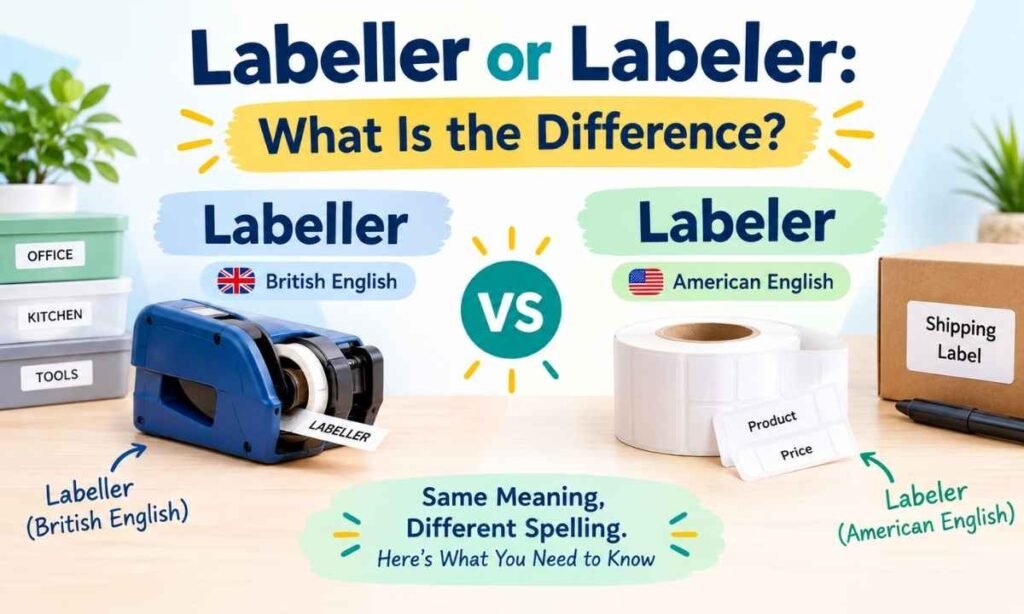
Labeller or labeler spellings are correct, but the preferred form depends on the variety of English you write. In American English, labeler is the standard spelling, so US writers should use it. Labeller is the common British spelling, and it appears in the UK, Australia, and New Zealand.
The difference follows a simple spelling pattern. American English usually keeps a single L before an ending when the stress is not on the last syllable, while British English doubles it. This guide explains that rule, compares labeler and labeller with examples, and shows how related words such as labeling and labeled follow the same pattern.
Labeller or Labeler: Which Spelling Is Correct?
Labeler Is the Standard American English Spelling
In the United States, labeler is the standard spelling. It follows the same pattern as labeling and labeled, which also use a single L. If your readers are mostly American, labeler is the safe choice.
Labeller Is Common in British English
In British English, the L is doubled, so you will see labeller, labelling, and labelled. Writers in the UK, Australia, and New Zealand generally prefer these forms.
Do Both Spellings Have the Same Meaning?
Yes. Labeler and labeller mean exactly the same thing, and they are pronounced the same way. Only the spelling changes with the region.
What Does Labeler or Labeller Mean?
The word comes from the verb label and the ending er, which marks someone or something that performs an action. Depending on context, it can describe a person, a machine, or a role in technology.
Labeler as a Person Who Applies Labels
A labeler can be a worker who attaches labels to products, files, or boxes. In a warehouse, for example, one labeler may tag shipments while another checks them.
Labeler as a Labeling Machine
The word also names a device that prints or applies labels automatically. Bottling plants, food factories, and small offices all use labelers, from handheld units to full production line machines.
Labeler in Data Annotation and Technology
In technology, a labeler is a person who tags data, such as images, text, or audio, so that machine learning systems can learn from it. Data labeling teams often chat on messaging apps, where shortcuts like OSNS and TPWK are common. This sense of the word is usually written labeler in US sources.
Labeller vs. Labeler: Key Differences
The two spellings differ in region, not in meaning. The table below puts the main points side by side.
| Feature | Labeler | Labeller | Notes |
| Spelling | One L before er | Double L before er | Same root word, label |
| Regional preference | United States | UK, Australia, New Zealand | Canada varies |
| Meaning | Person or machine that applies labels | Person or machine that applies labels | No difference |
| Example sentence | The labeler tagged every crate. | The labeller tagged every crate. | Pronounced the same |
American and British Spelling
Labeler is the American form and labeller is the British form. Neither one is a mistake, as long as it matches the variety of English you are writing.
Meaning and Pronunciation
Both words are pronounced LAY buh ler, and both carry the same meanings. A listener cannot tell which spelling you have in mind.
Which Spelling Should You Choose?
Choose the spelling that suits your audience. US readers expect labeler, while readers in the UK and most Commonwealth countries expect labeller.
When to Use Labeler
Labeler in American English
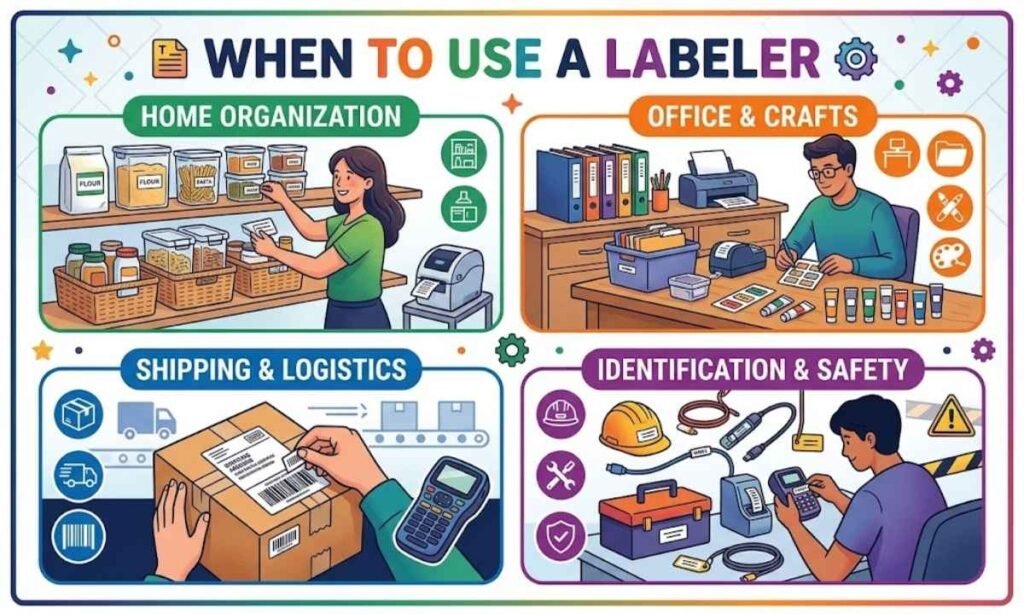
Use labeler in any text written for a US audience, including articles, reports, product pages, and school work. Keep it in line with labeling and labeled.
Labeler in Manufacturing and Packaging
American equipment makers and suppliers usually call a labeling machine a labeler. You will see it in product names, manuals, and catalogs across the packaging industry.
Labeler in Technology and Data Work
Job posts and research papers from US companies often use labeler for annotation work. The term describes the person who tags the data and, sometimes, the tool that helps them do it.
Example Sentences Using Labeler
• The labeler on the night shift finished two hundred boxes before midnight.
• We bought a new labeler for the pharmacy shelves.
• Each labeler on the project reviewed fifty images a day.
• The handheld labeler printed the price in seconds.
When to Use Labeller
Labeller in British English
Use labeller when you write for readers in the UK. It matches other British forms such as labelled and labelling, which keeps your text consistent.
Labeller in Packaging and Industrial Settings
British suppliers and factories often list a labelling machine as a labeller. The word appears in catalogues, safety notes, and technical sheets for food and drink producers.
Example Sentences Using Labeller
• The labeller on the bottling line needs new rolls of tape.
• Our factory in Leeds installed a faster labeller last spring.
• She worked as a labeller in a pharmaceutical warehouse.
Labeler or Labeller in American, British and Canadian English
Usage in the United States
American dictionaries and style guides prefer labeler, labeling, and labeled. Writers in the US should use the single L forms throughout.
Usage in the United Kingdom
British publications use labeller, labelling, and labelled. These forms are standard in UK writing.
Usage in Canada, Australia and New Zealand
Australia and New Zealand generally follow British spelling. Canada is more mixed, and the choice can vary by word and by publication style, so follow the style guide of the outlet you write for. English is used by many communities, and everyday phrases like barakallahu feekum show how varied the language of readers can be.
| Region | Usual spelling | Note |
| United States | Labeler | Standard in American English |
| United Kingdom | Labeller | Standard in British English |
| Canada | Varies | Depends on the word and publication style |
| Australia | Labeller | Generally follows British spelling |
| New Zealand | Labeller | Generally follows British spelling |
Labeler, Labeling and Labeled: Related Spellings
Every form of the verb label follows the same regional pattern. This compact table shows them together.
| Base word | American spelling | British spelling | Example |
| Labeler or labeller | Labeler | Labeller | A labeler or labeller works here. |
| Labeling or labelling | Labeling | Labelling | The labeling or labelling is clear. |
| Labeled or labelled | Labeled | Labelled | The box is labeled or labelled. |
| Relabeled or relabelled | Relabeled | Relabelled | They relabeled or relabelled it. |
Labeler vs. Labeller
The noun for a person or machine is labeler in American English and labeller in British English.
Labeling vs. Labelling
The noun and verb form meaning the act of applying labels is labeling in the US and labelling in British English.
Labeled vs. Labelled
The past tense and adjective form is labeled in the US and labelled in British English.
Relabeled vs. Relabelled
Adding the prefix re does not change the pattern, so American writers use relabeled and British writers use relabelled.
Why Do American and British Spellings Differ?
The Double L Spelling Pattern
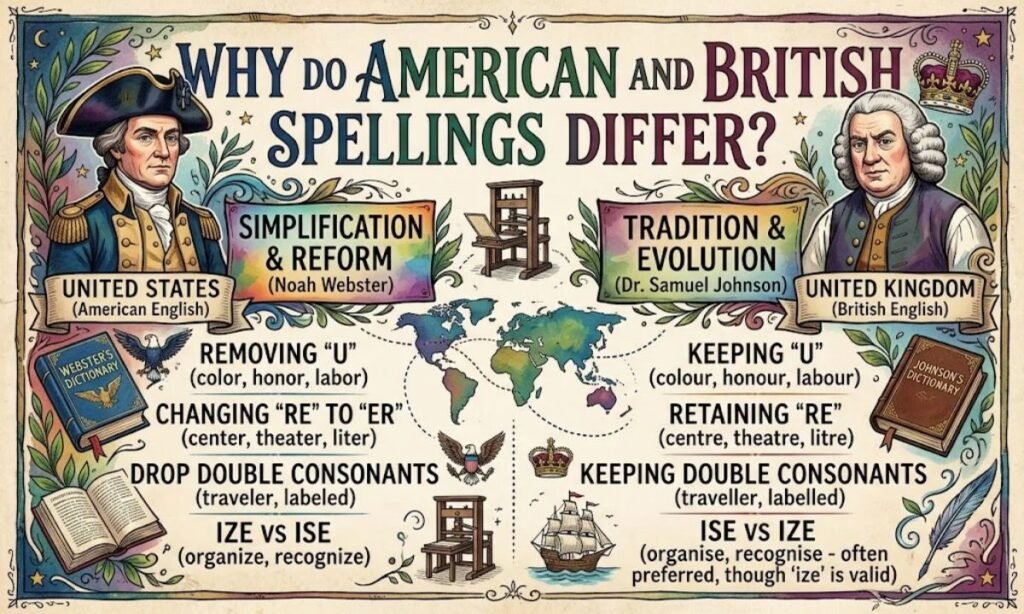
When a verb ends in a single L after a vowel, British English usually doubles the L before endings like ed, ing, and er. American English usually keeps one L when the stress is not on the last syllable. That is why travel becomes traveled in the US and travelled in the UK. This is a general tendency, not a rule for every word ending in L. Words with stress on the final syllable, such as control, double the L in both varieties, and a few words like fulfill and fulfil follow their own regional habits.
How Regional English Conventions Affect Word Endings
Spelling conventions developed separately in each region and were later fixed by dictionaries and style guides. The result is a set of small but consistent differences in word endings.
Why Consistency Matters in Writing
Readers notice when spelling changes from one paragraph to the next. Even casual writing benefits from a steady style, and slang like FEIN, NAUR, or ALR is easier to follow when the rest of the sentence is spelled the same way throughout.
Common Mistakes to Avoid
Assuming One Spelling Is Always Wrong
Labeler and labeller are both correct. Language has many accepted variants, much like the different ways people write hmmm or IGH in a message. Marking one as an error only because it looks unfamiliar is a common slip.
Mixing Regional Spellings in One Article
Writing labeler in one paragraph and labelling in another confuses readers. Informal chat is where spelling rules loosen the most, with shortcuts such as WYD, ASF, and GC, but published writing should stay consistent.
Ignoring the Intended Audience
Always think about who will read your text. A social media caption using TT, OTG, or HG suits a young online audience, while a US business report needs labeler, labeling, and labeled.
Frequently Asked Questions
Is it labeller or labeler?
Both are correct. Labeler is the US spelling, and labeller is the British spelling.
Is labeler American or British?
Labeler is the American spelling. British English prefers labeller.
Is labeller a real word?
Yes. Labeller is a valid word, widely used in British English and in countries that follow British spelling.
Do labeller and labeler mean the same thing?
Yes. Both mean a person or machine that applies labels, and both are pronounced the same.
Is it labeling or labelling?
Labeling is the American spelling, and labelling is the British spelling.
Which spelling should US writers use?
US writers should use labeler, labeling, and labeled, and keep them consistent throughout the text.
Does Canadian English use labeller or labeler?
It varies by word and publication style. Check the style guide of the outlet you are writing for.
Conclusion
Labeler is the preferred spelling in American English, while labeller is common in British English. Both mean the same thing, so neither one is wrong.
Match the spelling to your intended audience, and keep labeler, labeling, and labeled consistent from start to finish. That small habit makes your writing look careful and professional.


1 thought on “Labeller or Labeler: What Is the Difference?”