Antivirus Reedoor2.4.6.8 is not established as a recognized mainstream antivirus product. The name looks like security software, but nothing reviewed confirms a verified publisher, an official website or independent test results.
That does not automatically make it malware. This guide explains what you may have encountered, how to check your Windows PC step by step and how to respond safely if you saw a warning.
What Is Antivirus Reedoor2.4.6.8?
Understanding the Meaning of Reedoor2.4.6.8
Reedoor2.4.6.8 is a text string that combines a word like name with a long number sequence. It does not match any widely known security brand, so its identity is uncertain.
Why Does Its Name Look Like Antivirus Software?
Names that include the word antivirus and a version number look like normal software releases. Scam pages and unverified tools often copy that style to appear trustworthy.
Is It an Actual Security Application or an Unverified Software Name?
Based on the information reviewed, it is best treated as an unverified software name. Until a publisher and documentation are found, do not treat it as a real protection tool.
Why Are People Searching for Antivirus Reedoor2.4.6.8?
Most people search after seeing the name in a pop up, a download prompt, an installed apps list or an article. They want to know whether it is real and whether they are at risk.
| What You May Have Seen | What It Could Mean | First Step |
| A browser pop up with the name | A scareware style advertisement | Close the tab and do not click any buttons |
| The name in your installed apps | A program that may have been installed | Check the publisher and install date |
| A detection from Windows Security | A genuine alert about a file | Read the details and follow the suggested action |
| The name in a search result | An unfamiliar or misleading page | Avoid downloads and look for official sources |
Is Antivirus Reedoor2.4.6.8 a Real Antivirus Program?
Checking Its Software Publisher and Developer
A real security product names its company, address and support contact. If you cannot find who makes it, that is a serious warning sign.
Looking for an Official Website and Product Documentation
Legitimate software has an official site with a user guide, a privacy policy and a clear download page. Pages that only repeat the name are not proof.
Understanding Its Version Number
A number like 2.4.6.8 only suggests a version. Anyone can attach a version to a name, so it says nothing about quality or safety.
Why Independent Security Verification Matters
Independent labs test whether antivirus tools detect threats and avoid false alarms. A product that appears in no independent testing cannot be trusted on its own word.
What Available Evidence Tells Us About Its Authenticity
The evidence reviewed does not confirm a recognized publisher, official documentation or independent testing. Authenticity is therefore unproven.
Is Reedoor2.4.6.8 Safe or Dangerous?
Understanding Potential Security Risks
Because its source is unknown, you cannot judge what the software does. Risks range from annoying ads to stolen information.
Can an Unverified Program Harm Your Computer?
Yes, any unverified program can cause harm if it is malicious or poorly made. It may slow your PC, change browser settings or collect data.
Possible Privacy and Data Security Concerns
Unknown software may ask for broad permissions or collect browsing details. Never enter passwords or payment details into it.
Risks of Downloading Software From Unknown Websites
Unknown websites often bundle extra programs with their downloads. Learn to spot weak sites, as we show in our look at Pinoroduct.com.
How to Evaluate an Unfamiliar Security Application
Check the publisher, the official website, independent test results and the privacy policy. If any of these is missing, do not install it.
Is Antivirus Reedoor2.4.6.8 a Virus or Malware?
Difference Between a Malware Detection and a Software Name
A malware detection comes from a security tool that found a harmful file. A software name is only a label and proves nothing by itself.
Understanding Fake Antivirus Warnings
Fake warnings claim your PC is infected and push you to download a fix. They are advertisements or scams, not real scans.
How Scareware Tricks Computer Users
Scareware uses loud alerts, countdowns and fake scan screens to create panic. The goal is to make you click, pay or install something.
Can a Browser Pop Up Indicate a Real Infection?
A browser pop up alone does not prove your PC is infected. It can still point to a risky site or to notification permissions you should review.
Why the Name Alone Cannot Confirm Malware
Without a file, a scan result or technical analysis, calling it malware would be a guess. The right approach is to investigate and not assume.
Why Is Antivirus Reedoor2.4.6.8 Appearing Online?
Unfamiliar Software Names in Search Results
New or obscure names appear in search results through ads, copied articles and low quality sites. Treat unknown domains with care, as explained in our review of ThriftyEvents.net.
Misleading Security Alerts and Advertisements
Some ads imitate system alerts to look urgent. Real Windows alerts come from Windows Security and not from a web page.
Conflicting Descriptions Across Technology Websites
Different sites describe the same name as software, a virus or a scam. Many repeat each other without testing anything.
How Version Like Numbers Create Confusion
Numbers such as 2.4.6.8 make a name look like a mature product. A version number is easy to invent and tells you nothing about trust.
The Difference Between Online Claims and Verified Information
A claim is something a page says. Verified information can be checked through the publisher, a test lab or your own scan results.
How to Check Reedoor2.4.6.8 on a Windows Computer
The steps below work on a typical Windows 10 or Windows 11 PC. Menu names can differ slightly between versions.
| Where to Look | What to Do | What to Watch For |
| Settings, then Apps | Open the installed apps list and search for the name | Unknown publisher or a recent install date |
| Task Manager | Press Ctrl, Shift and Esc together to open it | High use by a process you do not recognize |
| Windows Security | Open Virus and threat protection, then Protection history | Recent detections or blocked items |
| Browser settings | Review extensions and notification permissions | Extensions or sites you never added |
Checking Installed Applications in Windows Settings
Open Settings, choose Apps, then open the installed apps list and search for Reedoor. If nothing appears, it is probably not installed as a normal program.
Looking for Unknown Processes in Task Manager
Open Task Manager and review running processes. Do not end a process unless you know what it is, and search its exact name first.
Reviewing Windows Security Protection History
Open Windows Security, go to Virus and threat protection and read the protection history. It shows threats that were found, blocked or removed.
Identifying Suspicious Files and Software Publishers
Right click a suspicious file, open its properties and check the digital signature and publisher. A missing or odd publisher deserves more caution.
Checking Browser Extensions and Notification Permissions
Open your browser’s extensions page and remove anything you do not remember adding. Then review which sites are allowed to send notifications.
Using a Trusted Malware Scanner to Investigate Unknown Files
Use Microsoft Defender or another well known scanner to check unknown files. Avoid installing a new tool just because a pop up told you to.
What to Do If You See an Antivirus Reedoor2.4.6.8 Warning
Avoid Clicking Unexpected Download Buttons
Do not click buttons such as Fix now, Clean PC or Update. These are common ways to deliver unwanted software.
Close Suspicious Browser Pop Ups Safely
Close the tab or the whole browser using the normal close button. If it will not close, use Task Manager to end the browser and do not restore the session.
Check Whether the Alert Came From Your Browser or Antivirus
Real antivirus alerts appear in Windows Security or in the notification area, not as a web page. If it appeared inside a browser window, treat it as a web alert.
Run a Full Security Scan
Open Windows Security and run a full scan from the scan options. This takes longer but checks all files on your PC.
Remove Unwanted Browser Notifications
Open your browser’s site settings, find notifications and remove any site you do not trust. This stops fake alerts from returning.
Protect Your Passwords and Personal Information
If you typed passwords or card details into a suspicious page, change those passwords from a clean device. Also contact your bank if payment details were entered.
How to Remove Suspicious Reedoor2.4.6.8 Software
Identify Whether the Program Is Actually Installed
Check the installed apps list first. A scary page in your browser does not mean a program is on your PC.
Uninstall Unknown Applications Through Windows Settings
If you find an unfamiliar app, open Settings, choose Apps, select it and click Uninstall. Restart your computer afterward.
Scan Your Computer With Microsoft Defender
Run a full scan with Microsoft Defender after removal. This helps find leftover items that the uninstall missed.
Check Startup Applications and Browser Extensions
Open the startup apps list in Settings or Task Manager and disable anything unknown. Remove unfamiliar browser extensions as well.
Remove Remaining Suspicious Files Carefully
Delete only files you have clearly linked to the unwanted program. Avoid deleting system folders, since that can damage Windows.
When to Consider a Microsoft Defender Offline Scan
Use an offline scan if the problem returns, a scan cannot finish or the PC behaves strangely. It restarts your PC and scans outside normal Windows.
Antivirus Reedoor2.4.6.8 vs. Legitimate Antivirus Software
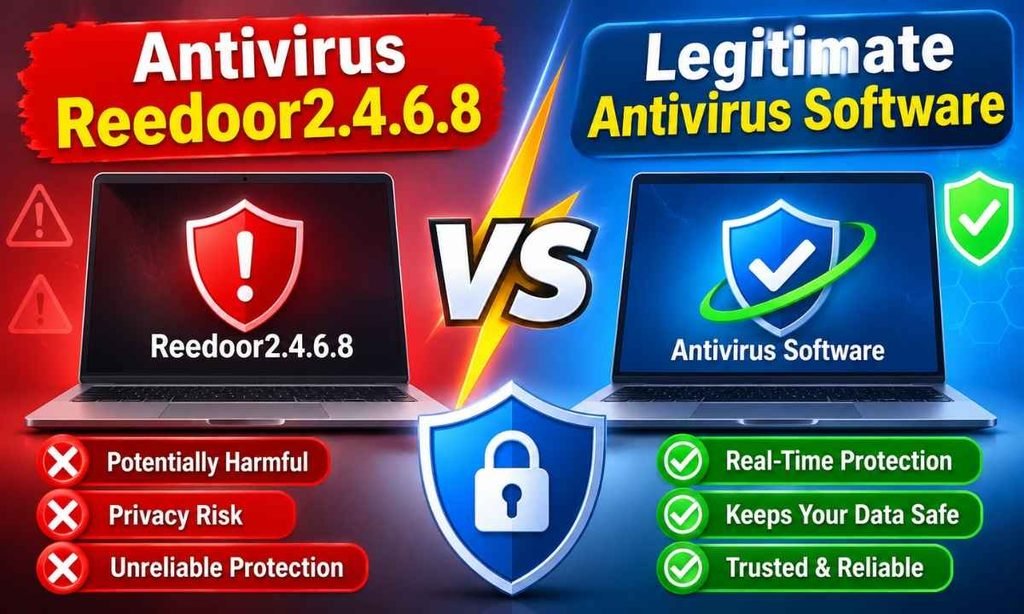
| Area | Antivirus Reedoor2.4.6.8 | Legitimate Antivirus |
| Publisher | Not verified | Named company with contact details |
| Downloads | No official source confirmed | Official site and trusted stores |
| Protection | Not independently confirmed | Real time protection, tested by labs |
| Testing | None found in the information reviewed | Independent test results available |
| Support and updates | Not confirmed | Regular updates and a support team |
Differences in Publisher Transparency
Trusted products show who makes them and how to reach them. Hidden ownership is a red flag.
Official Downloads and Software Documentation
Real programs have an official download page and clear instructions. Unknown mirror sites are risky.
Real Time Protection and Malware Detection
Real time protection watches files and web activity as you use your PC. Check that a product explains how its detection works.
Independent Security Testing and Reviews
Look for results from recognized independent labs, not only reviews on the product’s own pages. Missing test results mean missing proof.
Customer Support and Regular Security Updates
Security tools must update often to detect new threats. A product with no support or update history is a poor choice.
Best Practices for Choosing Reliable Antivirus Software
Verify the Developer Before Downloading
Search for the company name, its address and its history. Confirm that the download link comes from its official website.
Check Independent Antivirus Testing Results
Compare protection, performance and false alarm results from independent labs. Prefer products with consistent results over time.
Understand Real Time and Ransomware Protection
Look for real time scanning, web protection and ransomware defense. Features should be explained clearly and not hidden behind vague marketing.
Review Privacy Policies and Data Collection
Read what data the software collects and why. Security tools see a lot, so choose a publisher that explains this openly. Many security vendors now use smart tools too, as covered in our overview of AI tools in 2026.
Avoid Fake Security Offers and Unexpected Installers
Never install software because a pop up, an email or a phone caller told you to. Choose your own tools from official sources.
Why Built In Windows Security Can Be a Good Starting Point
Windows Security with Microsoft Defender comes with Windows and updates automatically. For many home users it is a sensible base before adding anything else.
Common Mistakes to Avoid When Dealing With Reedoor2.4.6.8
Assuming Every Security Warning Is Genuine
Many alerts on web pages are fake. Check where the alert came from before you act.
Downloading Unverified Antivirus Applications
Installing a second unknown tool to fix the first problem can make things worse. Stick to trusted publishers.
Deleting Important Windows Files Without Verification
Removing the wrong file can break Windows or hide the real issue. Delete only what you have confirmed.
Paying for Unsolicited Technical Support
Real companies do not call or pop up to sell you urgent repairs. Never give remote access or payment to an unexpected support contact.
Ignoring Genuine Antivirus Detection Notifications
Do not dismiss alerts from your real security tool. Open the details and follow its suggested action.
Frequently Asked Questions
What is Antivirus Reedoor2.4.6.8?
It is an unverified software name that looks like an antivirus product. It is not established as a recognized mainstream security tool.
Is Antivirus Reedoor2.4.6.8 a real antivirus?
Nothing reviewed confirms a real publisher or independent testing. Treat it as unproven until verified.
Is Reedoor2.4.6.8 a virus or malware?
The name alone cannot prove malware. Only a scan result or technical analysis of an actual file can confirm that.
Is Reedoor2.4.6.8 safe to download?
It is not safe to assume so. Avoid downloading software whose publisher and official site you cannot verify.
Why am I seeing Reedoor2.4.6.8 on my computer?
It may come from a browser pop up, an installed app or a misleading page. Check installed apps and your browser notifications.
Is Reedoor2.4.6.8 associated with Windows?
No connection to Windows or Microsoft is confirmed here. Real Windows alerts appear in Windows Security.
How do I check whether Reedoor2.4.6.8 is installed?
Open Settings, then Apps, and search the installed apps list. Also review Task Manager and your browser extensions.
How can I remove Reedoor2.4.6.8 from Windows?
Uninstall it from Settings if it is listed, then run a full Microsoft Defender scan. Also remove unknown extensions and startup items.
Can a fake antivirus warning infect my computer?
The warning itself is only a page, but clicking its buttons can install unwanted software. Close it without interacting.
Is Microsoft Defender enough to protect my PC?
For many home users it is a solid base when kept updated. Add safe habits such as avoiding unknown downloads.
Should I change my passwords after encountering suspicious software?
Yes, if you entered any details or installed something unknown. Change them from a clean device and turn on two step verification.
How can I identify a legitimate antivirus program?
Check for a named publisher, an official website and independent test results. Avoid anything promoted through pop ups.
Conclusion
Antivirus Reedoor2.4.6.8 is not a verified or mainstream security product, and its name alone does not prove it is malware. Check your installed apps, run a full scan and avoid any download or payment prompted by a pop up.
When choosing protection, rely on verified publishers, independent testing and the built in Windows tools. For a break from tech topics, you can also browse our post on Gadgets360 new web series.