Ask five different people what they call a drink and you will likely get five different answers. English speakers have invented hundreds of nicknames for alcohol over the last century, from prohibition-era code words to terms that only made sense after social media took over group chats.
This guide breaks down the most useful slang for alcohol by category, so you can sound natural whether you are texting a friend, writing a caption, or just curious about where a phrase like “liquid courage” came from.
What Counts as Slang for Alcohol
Slang for alcohol generally falls into two buckets: words that describe the drink itself, such as booze, sauce, or hooch, and words that describe the effect of drinking it, such as tipsy or hammered. Both types get lumped together in casual speech, but they answer different questions. One tells you what is in the glass. The other tells you how the person holding it feels.
Most alcohol slang forms through three patterns: shortening a real word, borrowing a nickname from a specific drink, or exaggerating an effect for comedic value. Booze, for example, traces back to a Middle English word for drinking heavily. Firewater describes the burning sensation of strong liquor. Giggle juice simply describes what the drink does to your mood.
100+ Slang Terms for Alcohol at a Glance
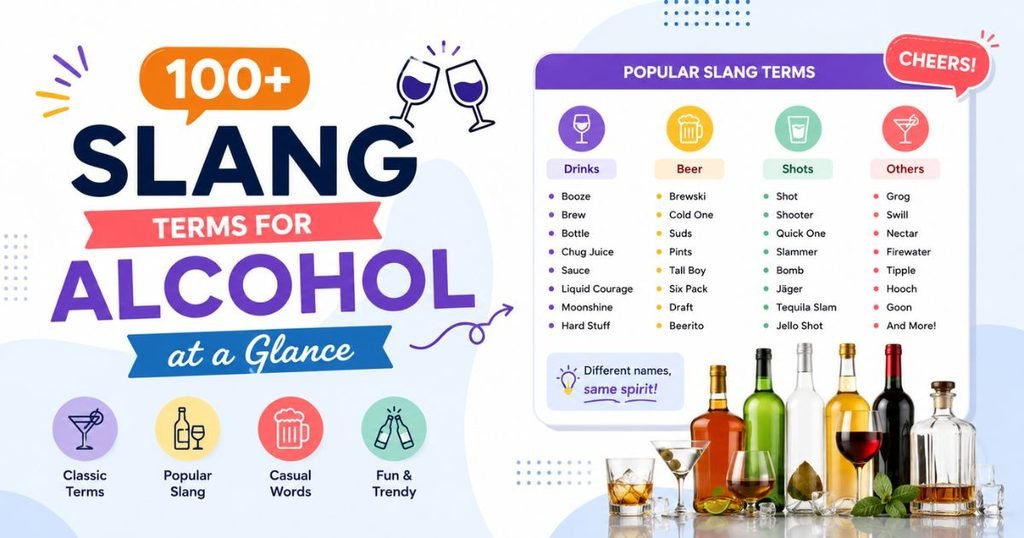
Use this table as a quick reference before diving into the categories below.
| Slang Term | Meaning | Drink Type | Tone |
| Booze | General alcohol | Any | Casual |
| Sauce | General alcohol | Any | Casual, modern |
| Hooch | Homemade or cheap liquor | Liquor | Old-school |
| Firewater | Strong liquor | Liquor | Playful |
| Cold One | A beer | Beer | Casual |
| Brewski | A beer | Beer | Playful |
| Vino | Wine | Wine | Casual, classy |
| Bubbly | Champagne | Champagne | Celebratory |
| Top-Shelf | Premium liquor | Liquor | Aspirational |
| Rotgut | Cheap, low-quality liquor | Liquor | Blunt |
| Liquid Courage | Alcohol that boosts confidence | Any | Humorous |
| Giggle Juice | Alcohol, playful term | Any | Funny |
Everyday Slang for General Alcohol
These are the terms most people reach for no matter what is actually in the glass.
- Booze – “We still need to grab booze for the party.”
- Sauce – “He brought way too much sauce for four people.”
- Juice – “Pass the juice, I’m ready for a refill.”
- Spirits – “The cabinet is stocked with every kind of spirits.”
- The Good Stuff – “Save the good stuff for the toast.”
- Hard Stuff – “I’m sticking to beer, no hard stuff tonight.”
- Poison – “What’s your poison tonight?”
Read more DBL Meaning in Text: What Does DBL Mean in Messages?
Slang for Beer
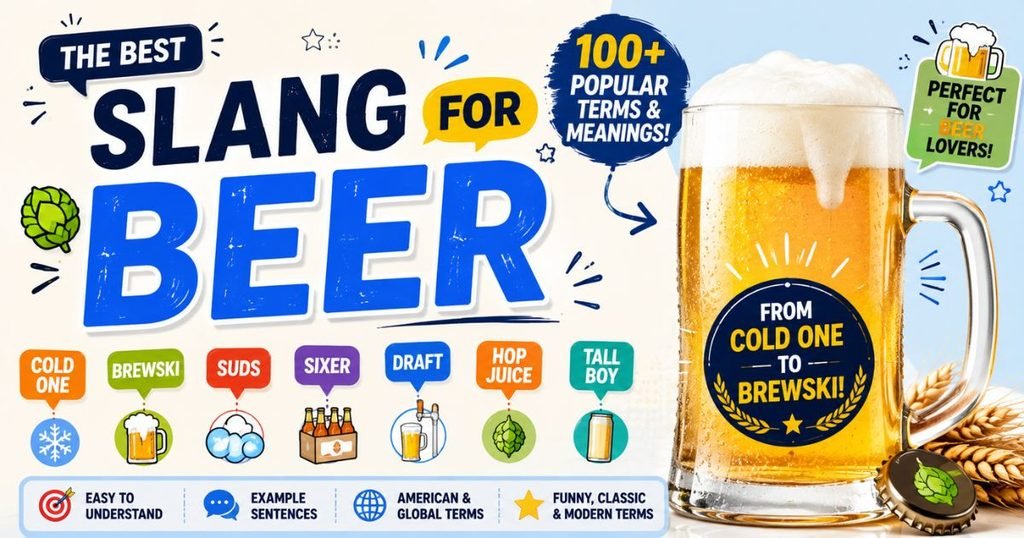
Beer has its own dedicated vocabulary, largely built around casual, everyday hangouts.
- Cold One – “Crack open a cold one after the game.”
- Brew – “Grab a brew from the fridge.”
- Suds – “Nothing beats suds on a hot day.”
- Sixer – “Pick up a sixer on your way over.”
- Half-Rack – “We only need a half-rack for tonight.”
- Draft – “I’ll take a draft over a bottle any day.”
Slang for Liquor and Hard Alcohol
Hard liquor slang tends to reference strength, quality, or how the drink is made.
| Term | What It Signals | Example Use |
| Moonshine | Homemade, unregulated liquor | “His uncle still makes moonshine.” |
| White Lightning | Very strong, clear moonshine | “That white lightning will knock you out.” |
| Well Liquor | The bar’s cheapest house liquor | “I’ll just take well liquor with soda.” |
| Firewater | Strong, harsh liquor | “That firewater burns going down.” |
Funny and Playful Slang for Alcohol
These terms lean into humor and are common in group texts, party invites, and social captions.
- Giggle Juice – “One more giggle juice and we’re dancing.”
- Happy Juice – “Bring the happy juice to book club.”
- Rocket Fuel – “That punch is basically rocket fuel.”
- Liquid Gold – “Grandpa’s whiskey is liquid gold.”
- Adult Beverage – “I’ll take an adult beverage, please.”
- Devil’s Brew – “My grandmother still calls wine the devil’s brew.”
Slang for Wine and Champagne
Wine and champagne slang skews slightly more polished than beer or liquor terms, though it can still be casual.
- Vino – “Let’s split a bottle of vino.”
- Plonk – “It’s cheap plonk, but it works.”
- Bubbly – “Pop the bubbly, it’s midnight.”
- Champers – “Champers for the whole table.”
Slang for Cocktails and Mixed Drinks
Mixed drinks and party punches have their own naming traditions, often tied to how they’re served.
- Jungle Juice – “Someone spiked the jungle juice again.”
- Hunch Punch – “Don’t ask what’s in the hunch punch.”
- Highball – “I’ll have a whiskey highball.”
- Shooter – “One shooter and I’m calling it a night.”
- Nightcap – “Just one nightcap before bed.”
Slang for Getting Drunk, Not the Drink Itself
It’s worth separating these clearly, since they describe a person’s state, not what’s in their glass.
- Buzzed – mild, early intoxication
- Tipsy – light-headed but still in control
- Sloshed – noticeably drunk
- Hammered – very drunk
- Plastered – extremely drunk
- Smashed – heavily intoxicated
Gen Z and Modern Alcohol Slang
Newer terms have grown out of social media and group-chat culture, though not every playful word is exclusive to Gen Z.
- Sauce – “bring the sauce” is common across age groups now.
- Drank – stylized spelling used mostly online.
- Party Fuel – used for pre-party drinks.
- Hangxiety – the anxious feeling after a night of drinking.
American Slang for Alcohol
American English favors short, punchy words: booze, cold one, brew, hooch, and firewater are among the most recognized across regions in the United States. These terms show up constantly in casual conversation, texting, and social captions, which makes them useful for anyone writing US-focused content.
Old-School and Prohibition-Era Slang
Some of the most colorful alcohol slang comes from the 1920s, when speakeasies needed coded language to avoid law enforcement.
- Hooch – illegal homemade liquor
- Giggle Water – a lighthearted term for cocktails
- Bathtub Gin – homemade gin, often poorly made
- Juice Joints – speakeasies that served alcohol illegally
Slang for Cheap Versus Premium Alcohol
Quality has its own vocabulary, and the two ends of the spectrum rarely overlap.
- Cheap: rotgut, hooch, swill, bum wine
- Premium: top-shelf, liquid gold, the good stuff, call brand
Bartender and Bar Culture Slang
People who work behind the bar have their own shorthand that rarely makes it into general slang lists but shapes how orders get placed and filled.
- Neat – liquor served with no ice or mixer
- On the Rocks – served over ice
- Call Brand – a named, mid-tier liquor brand requested by the customer
- Rail Drink – a drink made with the bar’s basic house liquor
- Last Call – the bartender’s final chance to order before closing
Slang Used in Pop Culture and Music
Movies, TV, and song lyrics have pushed certain alcohol slang into mainstream use faster than word of mouth ever could. Terms like sauce, drank, and liquid courage gained wider recognition partly because they showed up repeatedly in music and film dialogue, which normalized them for younger audiences long before they became everyday texting slang.
Regional US Alcohol Slang
Alcohol slang can shift depending on where you are in the country. Some terms are near-universal, while others stay local.
- Southern US: moonshine and white lightning remain closely tied to the region.
- Northeast: package store or packie is common slang for a liquor store.
- Midwest: pop the tab is sometimes used specifically for beer.
- West Coast: crushing a few is a casual way to describe drinking beers quickly.
Slang for Non-Alcoholic and Low-Alcohol Drinks
As mocktails and sober-curious culture grow, a newer set of terms has developed alongside traditional alcohol slang.
- Mocktail – a cocktail made without alcohol
- Zero Proof – a drink with no alcohol content
- Session Beer – a lower-alcohol beer meant for extended drinking
- NA Beer – shorthand for non-alcoholic beer
How to Use Alcohol Slang Naturally
Slang works best when it matches the setting. Casual terms like sauce, cold one, and brewski fit texts, captions, and conversations with friends. Terms like hooch, rotgut, or bathtub gin sound outdated in everyday speech and are better suited for storytelling or historical context. Avoid alcohol slang entirely in professional settings, formal writing, or around anyone who might not share the same context, since it can easily come across as careless.
Alcohol Slang Grouped by Tone
| Tone | Example Terms |
| Funny | Giggle juice, rocket fuel, happy juice |
| Casual | Sauce, cold one, brew |
| Classy | Vino, bubbly, champers |
| Old-School | Hooch, grog, giggle water |
| Strong | Firewater, rocket fuel, white lightning |
What Is the Best Slang Word for Alcohol
There isn’t one single best term, since the right word depends on context. Booze works as the most universally understood general term. Cold beer is the top pick for beer. Giggle juice wins for humor. Firewater best signals strength. Top-shelf is the clearest way to reference premium liquor.
Frequently Asked Questions
What is the most common slang word for alcohol?
Booze is the most widely recognized general slang term for alcohol in American English.
What is a funny word for alcohol?
Giggle juice and happy juice are two of the most commonly used playful terms.
What do Americans typically call alcohol?
Booze, sauce, cold one, and hard stuff are among the most common everyday terms.
What is slang for drinking alcohol quickly?
Crushing a few, throwing one back, and pregaming all describe fast or early drinking.
What is slang for beer specifically?
Cold one, brew, brewski, and suds are the most common terms used for beer.
What does liquid courage mean?
It refers to alcohol consumed to feel more confident, usually before a nerve-wracking situation.
Is Gen Z alcohol slang different from older slang?
Some terms like drank and hangxiety are newer, but many playful terms are shared across generations.
Conclusion
Alcohol slang keeps evolving, mixing decades-old terms like hooch and firewater with newer ones like sauce and hangxiety. Knowing the difference between slang for the drink itself and slang for the effect it has helps you use these terms accurately. Whether you’re texting a friend, writing social captions, or just curious about word origins, this list covers the terms that actually show up in everyday American English.