
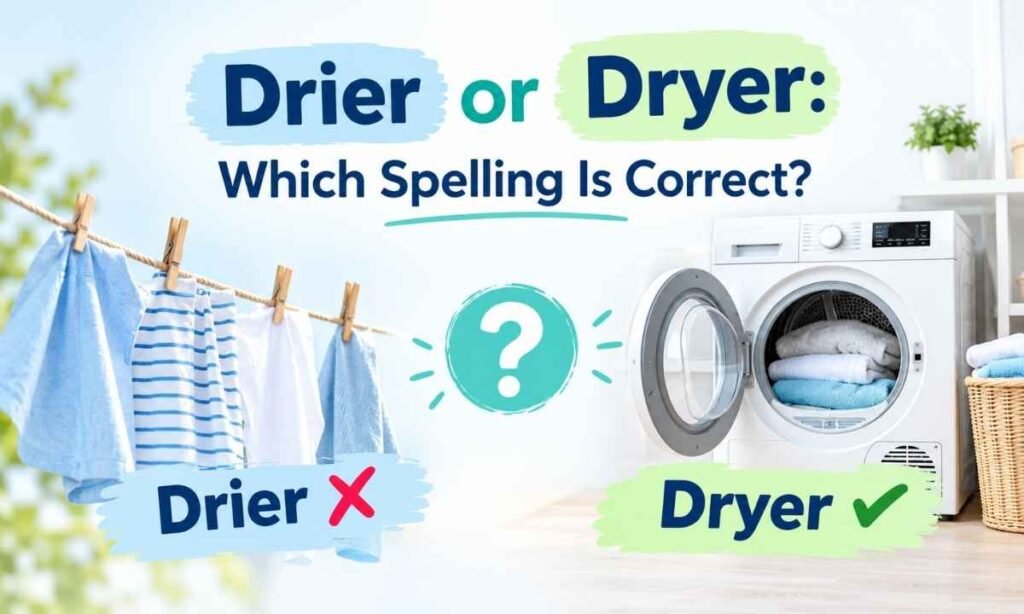
Drier and dryer sound identical, and both are real words, so it is easy to grab the wrong one. The Drier or Dryer difference is small but clear once you know it. One word compares how wet things are, and the other names a machine or a person who dries.
Drier is the comparative form of dry, meaning less wet. Dryer is the device, such as a clothes dryer or hair dryer. This guide explains the rule, shows examples from weather, laundry, and personal care, and covers related forms, synonyms, and common mistakes. It is written for students, professionals, and busy writers.
Drier vs. Dryer: The Quick Answer
When to Use Drier
Use drier when you compare two things and one is less wet. “Today is drier than yesterday” is a standard example.
When to Use Dryer
Use dryer when you mean a machine or tool that removes moisture, such as a clothes dryer, hair dryer, or hand dryer.
Drier vs. Dryer at a Glance
| Word | Meaning | Example |
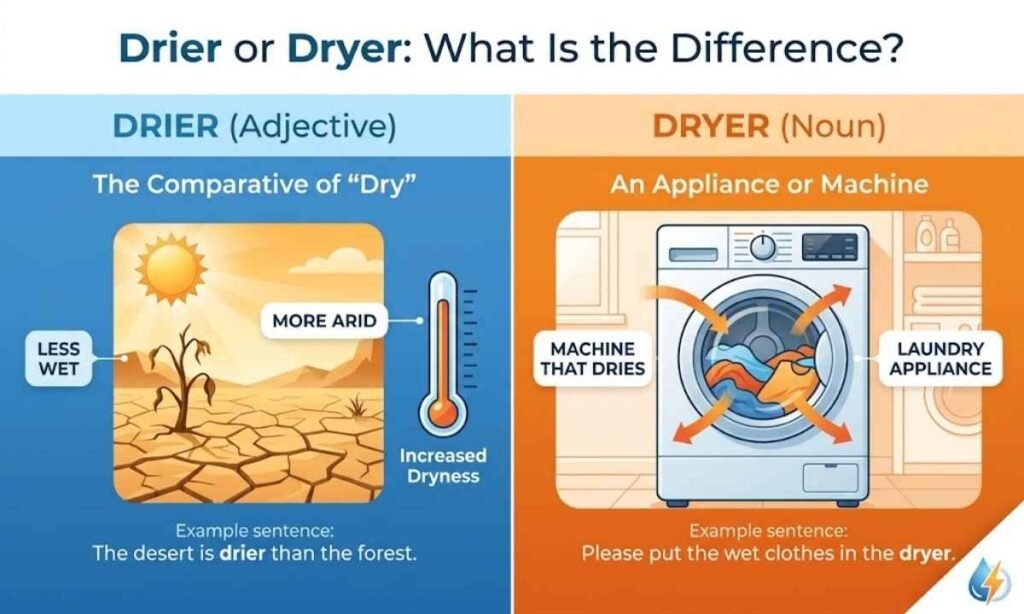
| Drier | Less wet; comparative of dry | The desert is drier than the coast. |
| Dryer | A machine or device that dries | Put the towels in the dryer. |
What Does Drier Mean?
Drier as the Comparative Form of Dry
Drier is the comparative form of the adjective dry. It shows that one thing has less moisture than another. The word dry changes its y to i before er, which gives drier.
Drier Meaning in Everyday English
People use drier for weather, soil, food, skin, and even humor. A drier wit means a more dry, understated sense of humor, and a drier wine means one with less sweetness.
Examples of Drier in Sentences
• This summer is drier than the last one.
• Her skin feels drier in winter.
• The cake came out drier than I wanted.
What Does Dryer Mean?
Dryer as a Machine or Device
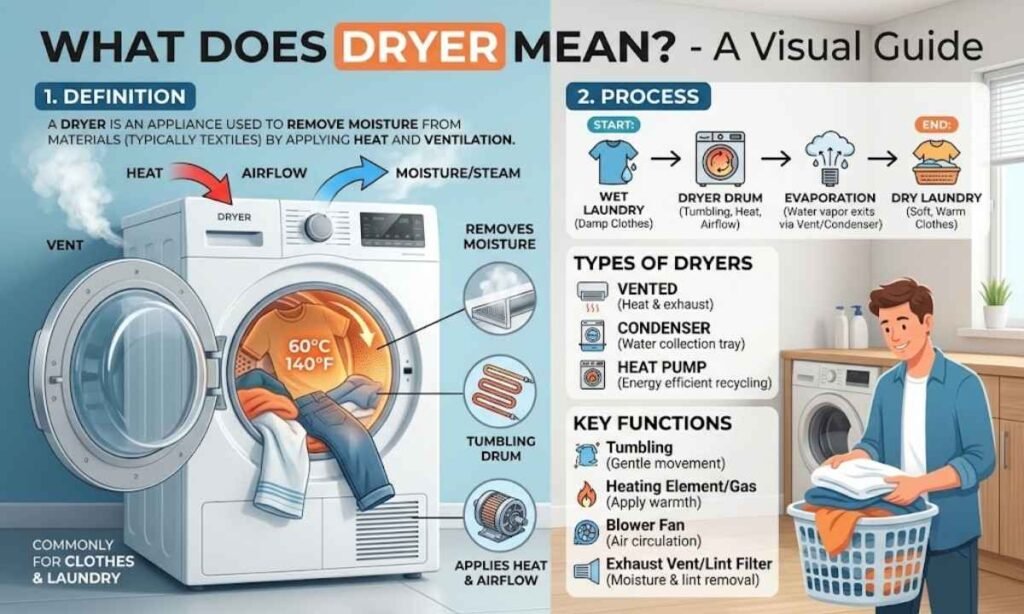
A dryer is anything built to remove moisture. The word comes from the verb dry plus the ending er, which names a thing or person that does the action. The y stays because the ending names a doer, not a comparison.
Common Types of Dryers
• Clothes dryer: dries laundry with heat and tumbling.
• Hair dryer: blows warm air to dry hair.
• Hand dryer: dries hands in public restrooms.
• Spin dryer: removes water from clothes by spinning.
• Heat pump dryer: dries laundry with low energy use.
Examples of Dryer in Sentences
• The dryer finished its cycle an hour ago.
• She bought a new hair dryer for the trip.
• Our dryer needs a cleaner lint filter.
Drier or Dryer: What Is the Difference?
Difference in Meaning and Grammar
Drier is an adjective or adverb form used for comparison. Dryer is a noun that names a machine or a person who dries. They sit in different parts of the sentence, so the grammar is a strong clue.
How Context Determines the Correct Word
Ask what the word is doing. If it follows is, was, or seems and compares things, use drier. If it follows the, a, or my and names an object, use dryer.
Can Dryer Ever Describe Something Less Wet?
A few dictionaries list dryer as a rare variant of drier, but careful writers avoid it. Use drier for comparison to stay safe and clear.
Drier vs. Dryer Examples in Real Life Situations
Weather and Climate Examples
• The forecast calls for a drier week ahead.
• Inland areas are drier than coastal towns.
Laundry and Household Examples
• Move the wet sheets from the washer to the dryer.
• The towels feel drier after a second cycle.
Hair Care and Personal Care Examples
• Her hair is drier after bleaching.
• He packed a travel hair dryer.
Correct and Incorrect Usage Examples
• Incorrect: The clothes are in the drier. Correct: The clothes are in the dryer.
• Incorrect: Today is dryer than yesterday. Correct: Today is drier than yesterday.
• Incorrect: She used a hair drier on low heat. Better: She used a hair dryer on low heat.
Why Do People Confuse Drier and Dryer?
Why Both Words Sound the Same
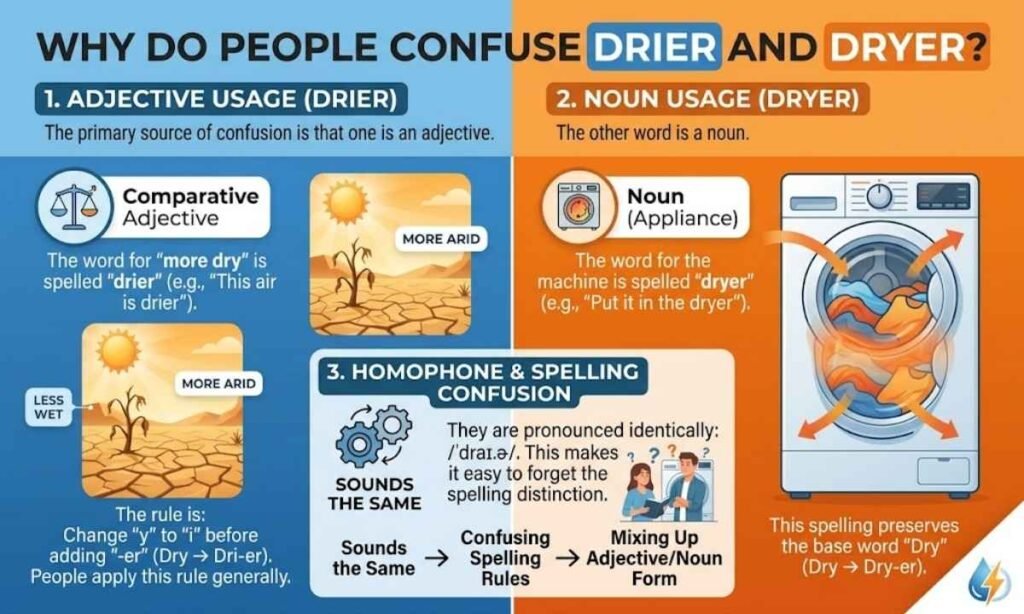
Both words are pronounced the same way, so the ear gives no clue. Only the spelling shows which meaning is intended.
The Spelling Rule for Dry, Drier, and Driest
When an adjective ends in a consonant plus y, the y turns into i before er and est. That rule gives dry, drier, and driest. The same pattern gives happy, happier, and happiest.
Common Drier vs. Dryer Mistakes
• Writing dryer for a comparison.
• Writing drier for a machine.
• Forgetting that driest, not dryest, is the superlative.
Is It Hair Drier or Hair Dryer?
The Most Common Spelling in American English
Hair dryer is by far the most common spelling in American English. Stores, brands, and news outlets use it almost every time.
Is Hair Drier Also Acceptable?
Some dictionaries list drier as a variant for the machine, so hair drier is not a serious error. Still, hair dryer is the safer and more familiar choice.
Examples of Hair Dryer in a Sentence
• She set the hair dryer to low heat.
• The salon sells a quiet hair dryer.
Drier, Dryer, and Driest: Related Word Forms
Dry vs. Drier vs. Driest
Dry is the base form, drier compares two things, and driest compares three or more. For example, the Sahara is the driest desert on earth.
Drying vs. Dryer
Drying is the action in progress, as in “she is drying her hair.” Dryer is the tool that does the drying.
How to Choose the Correct Word Form
| Form | Role | Example |
| Dry | Adjective or verb | The towel is dry. |
| Drier | Comparative | This towel is drier than that one. |
| Driest | Superlative | This is the driest towel. |
| Drying | Action | I am drying the dishes. |
| Dryer | Machine | The dryer is warm. |
Synonyms for Drier and Dryer
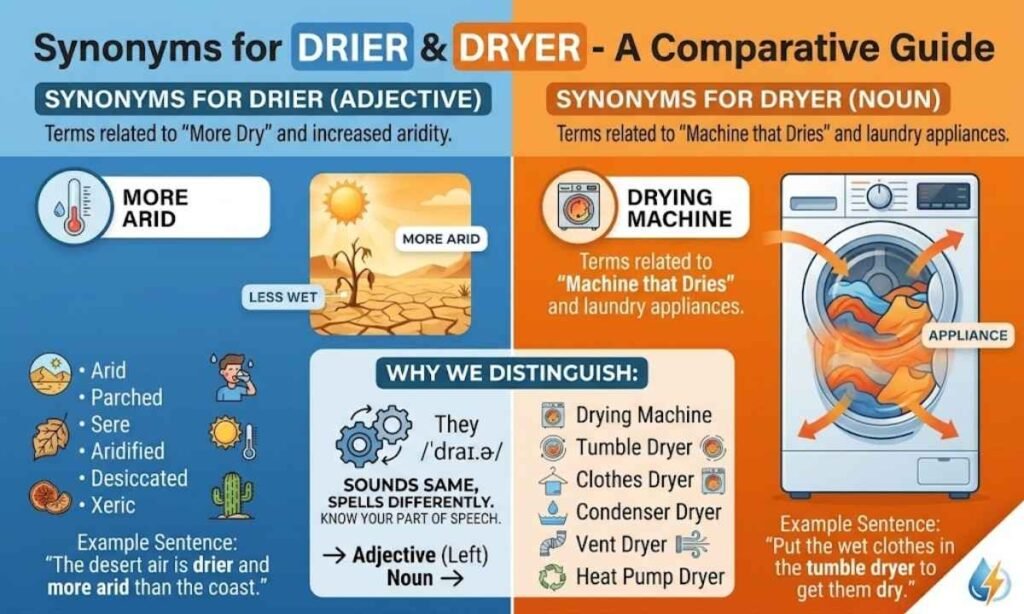
Alternatives to Drier: Less Damp and More Arid
• Less damp: describes moisture that has dropped.
• More arid: describes land with very little rain.
• Less humid: describes air with less moisture.
Alternatives to Dryer: Drying Machine and Dehydrator
• Drying machine: a plain term for a clothes dryer.
• Dehydrator: a device that dries food.
• Blow dryer: another name for a hair dryer.
When These Alternatives Fit Best
Use less damp or more arid when you want more detail about the weather or land. Use drying machine or dehydrator when you need to name a specific tool.
Quick Memory Trick for Drier and Dryer
Dryer keeps its y and ends in er, like washer, heater, and printer, which are all machines. Drier swaps the y for i, just like happier and easier, because it compares.
Other Spelling Guides Worth Reading
• Not sure whether to write one word or two? Read high school or highschool.
• Curious about look alike terms from science and health? See kinesthesiology vs. kinesiology.
Quick Proofreading Checklist
• Search your draft for drier and dryer.
• Check each one against comparison or machine.
• Use driest, not dryest, for the superlative.
• Prefer hair dryer for the styling tool.
Why Correct Spelling Matters in Professional Writing
A mixed up word can confuse a reader or weaken a product page, a manual, or a resume. Correct spelling keeps your meaning clear and your work credible.
Frequently Asked Questions
Is It Drier or Dryer for a Machine?
Dryer is the standard spelling for a machine. Drier is a rare variant.
Is Drier a Misspelling of Dryer?
Not always. Drier is a correct word, but it means less wet, not a machine.
What Is the Comparative Form of Dry?
The comparative is drier, as in “this room is drier than that one.”
Is It Hair Drier or Hair Dryer?
Hair dryer is the common spelling. Hair drier is a less common variant.
Do Drier and Dryer Sound the Same?
Yes. They are pronounced alike, so the spelling must show the meaning.
What Is the Superlative of Dry?
The superlative is driest, with the y changed to i.
Is Dryer Ever Correct as a Comparative?
Some dictionaries allow it as a rare variant. Drier is the safer choice.
Conclusion
Drier and dryer are both correct, but they do different jobs. Use drier when you compare two things and one has less moisture. Use a dryer when you name a machine or device that dries, such as a clothes dryer or hair dryer. The spelling follows the grammar, so the sentence tells you which one fits.
Remember the simple rule: dry becomes drier and driest for comparisons, while dryer names the tool. If you are unsure, ask whether you are comparing or naming. Check your draft for both spellings before you publish, and your writing will stay clear, accurate, and professional.


1 thought on “Drier or Dryer: Which Spelling Is Correct?”