
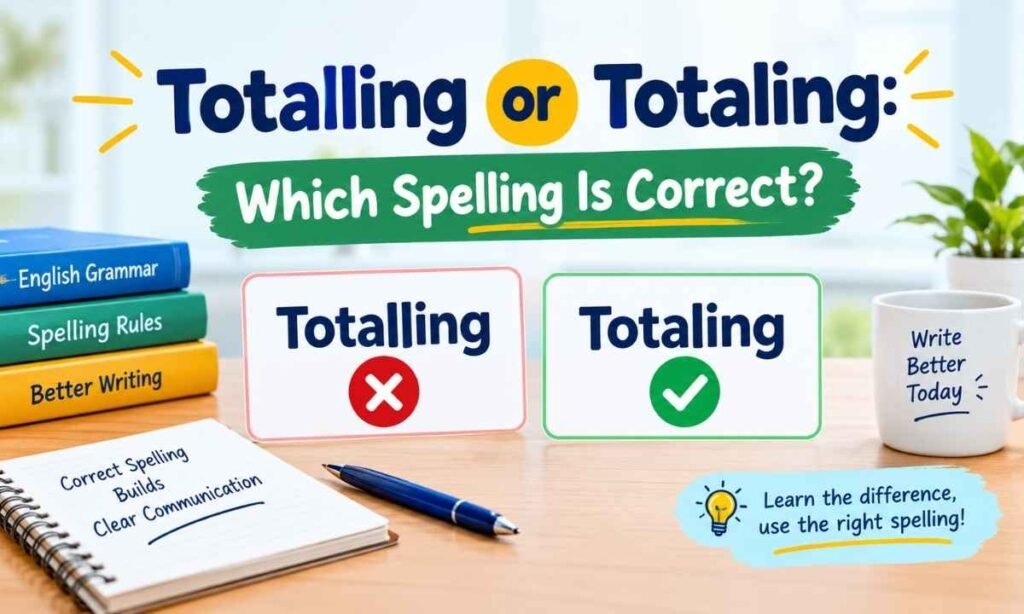
Totalling and totaling look like a typo of each other, yet both appear in respected dictionaries. The Totalling or Totaling difference comes down to where your readers live, not to right and wrong. Many writers pick one by habit and never learn why the other exists.
Totaling is the standard American spelling, and totalling is the standard British spelling. This guide explains the rule, shows examples for each region, and covers word forms, synonyms, and common mistakes. You will also find clear FAQ answers. It is written for students, professionals, and busy writers.
Totalling vs. Totaling: The Quick Answer
Which Spelling Is Correct in American English?
Totaling, with one l, is correct in American English. The past tense is totaled.
Which Spelling Is Correct in British English?
Totalling, with two l letters, is correct in British English. The past tense is totalled. Canadian and Australian writers often follow the British pattern.
Totalling vs. Totaling: Key Differences at a Glance
| Feature | American English | British English |
| Present participle | Totaling | Totalling |
| Past tense | Totaled | Totalled |
| Example | The bill is totaling $50. | The bill is totalling 50 pounds. |
What Does Totaling Mean?
Totaling as a Verb Form
Totaling is the present participle of the verb total. It means adding numbers together or reaching a sum, and it shows an action in progress.
Totaling in Financial and Everyday Writing
Accountants, shoppers, and teachers all use totaling when they add up costs, points, or hours. It also works in reports, where a figure reaches a certain amount.
Totaling Example Sentences in American English
• She is totaling the receipts for the tax report.
• Donations totaling $5,000 arrived this month.
• The teacher is totaling the quiz scores now.
What Does Totalling Mean?
Totalling in British English
Totalling has the same meaning as totaling. It is simply the British form, with the final l doubled before ing.
How to Use Totalling in a Sentence
Use it as a verb or as a describing word before a sum of money, a count, or a score. The grammar does not change from the American version.
Examples of Totalling in British Writing
• He is totalling the monthly expenses.
• Costs totalling 800 pounds were approved.
• The committee is totalling the votes tonight.
Why Do Totalling and Totaling Have Different Spellings?
The American and British English Spelling Difference
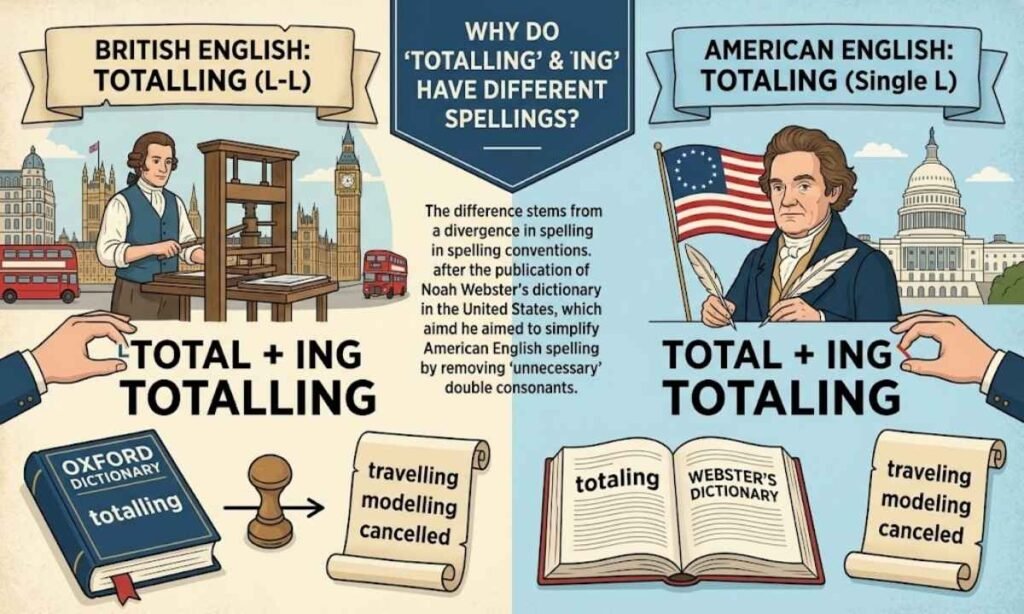
British English usually doubles a final l when adding an ending. American English usually keeps one l unless the last syllable is stressed. Noah Webster pushed simpler American spellings in the early 1800s, and the habit stuck.
When to Use a Double L Before ing
In American English, double the l only when the stress falls on the last syllable, as in controlling and compelling. In British English, double it in nearly every case.
How Totaling Differs From Travelling and Traveling
Total follows the same pattern as travel. The stress sits on the first syllable, so American English writes traveling and totaling, while British English writes travelling and totalling.
Totalling or Totaling in a Sentence
Examples About Bills, Expenses, and Budgets
• The bills are totaling more than we planned.
• Expenses totalling 1,200 pounds were listed.
• She is totaling the budget before the meeting.
Examples About Sales, Donations, and Scores
• Sales totaling $40,000 set a new record.
• Donations totalling 3,000 pounds reached the charity.
• He is totaling the scores for each team.
Correct and Incorrect Regional Spelling Examples
• Correct for a US reader: We are totaling the invoices.
• Correct for a UK reader: We are totalling the invoices.
• Mixed and confusing: We are totaling the invoices, and the colour is red.
Totaling vs. Totalling: Which Should You Use?
The Best Spelling for US Readers
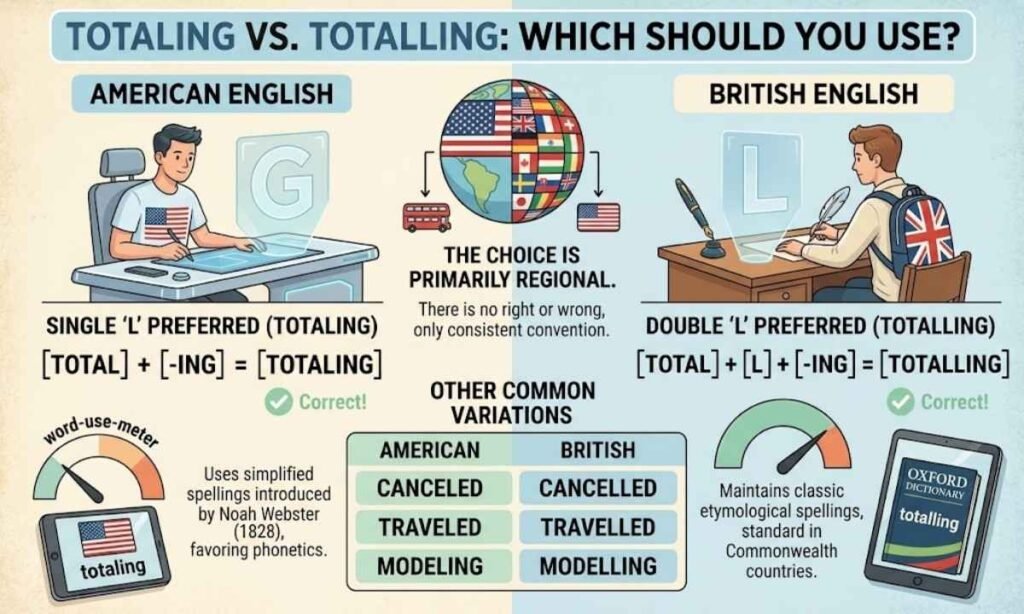
Choose totaling and totaled for readers in the United States. Most style guides, news outlets, and schools there follow this form.
The Best Spelling for UK Readers
Choose totalling and totalled for readers in the United Kingdom, and often for Canada, Australia, and other places that follow British style.
How to Maintain Consistency in Professional Writing
Pick one spelling for the whole document and match every other word to it. If you use totalling, also use colour and organise. Setting your editor to the right language prevents most slips.
Totaling, Totalling, Totaled, and Totalled Explained
American English Forms: Total, Totaling, and Totaled
American English uses total as the base form, totaling for action in progress, and totaled for the past.
British English Forms: Total, Totalling, and Totalled
British English uses total as the base form, totalling for action in progress, and totalled for the past.
Example Sentences Using Each Word Form
| Form | American English | British English |
| Base | I total the sales weekly. | I total the sales weekly. |
| Present participle | I am totaling the sales. | I am totalling the sales. |
| Past tense | I totaled the sales. | I totalled the sales. |
Totaled as Slang for a Wrecked Car
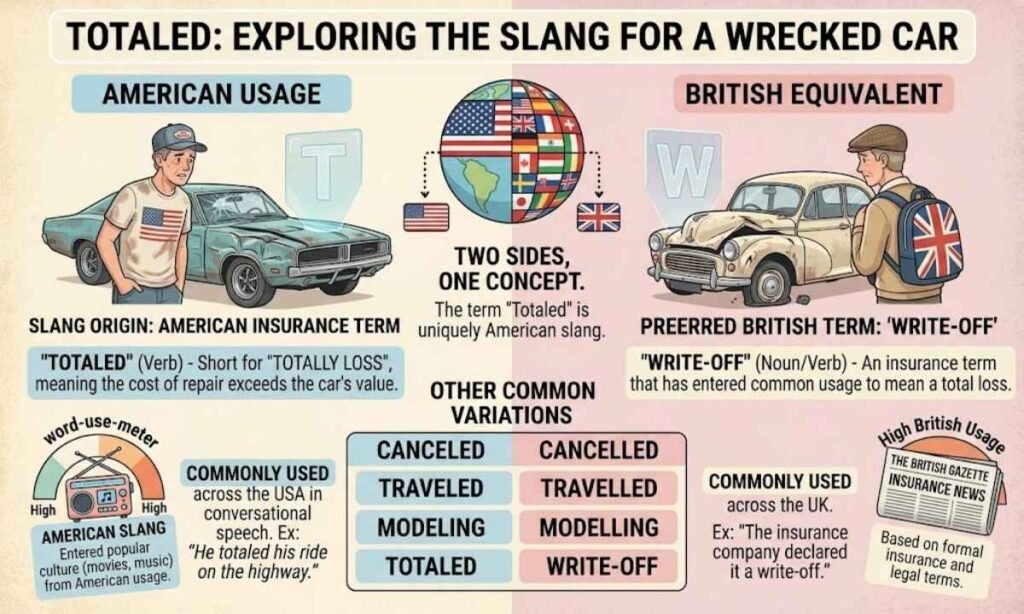
In American English, totaled has a second meaning. A car is totaled when the damage costs more to fix than the car is worth. For example, “The crash totaled his truck.” British English uses written off for the same idea, though totalled can also appear.
Common Mistakes When Using Totalling or Totaling
Assuming One Spelling Is Always Wrong
Neither spelling is an error. Each is correct in its own region, so judge it by audience, not by a single rule.
Mixing American and British Spelling
The most common slip is blending styles in one document, such as totaling next to colour. Readers notice the mismatch and may doubt your care.
Confusing Spelling With Grammar
The spelling choice does not change grammar. Both forms are verbs or describing words in the same positions, so only the letters differ.
Synonyms for Totaling and Totalling
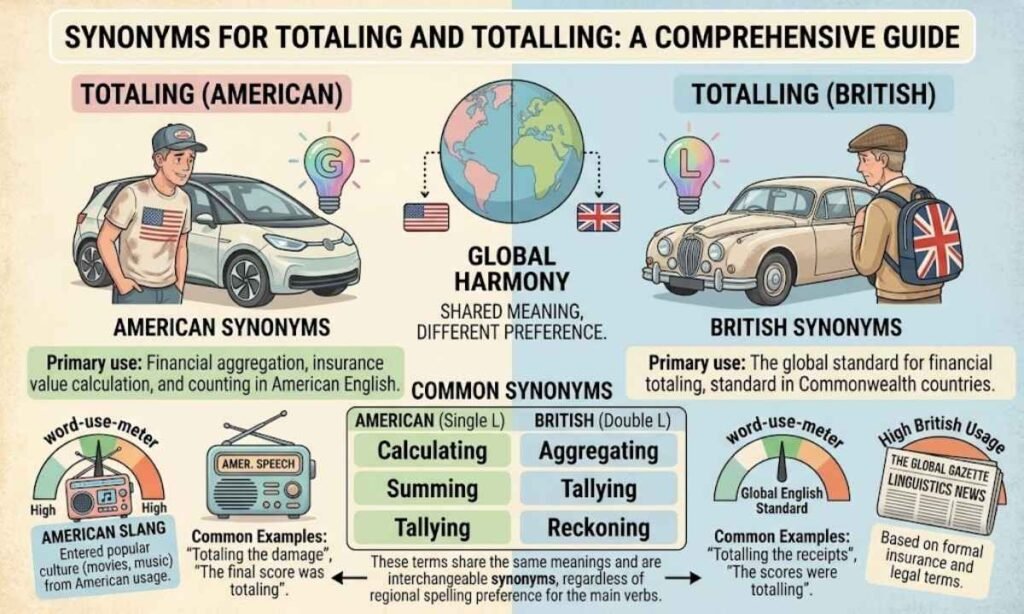
Adding Up, Calculating, and Summing
• Adding up: combining numbers into a sum.
• Calculating: working out a figure with care.
• Summing: reaching a total by addition.
• Tallying: counting items or points.
When to Use Amounting To Instead
Use amounting to when a figure reaches a level, as in “costs amounting to $900.” It reads smoothly in formal reports and avoids the spelling question altogether.
Quick Memory Trick for Each Spelling
Think of the letter count. The American spelling is shorter, so it has one l. The British spelling takes extra space, so it has two. Pair it with travel, and the pattern is easy to recall.
Other Spelling Guides Worth Reading
• Not sure whether to write one word or two? Read high school or highschool.
• Curious about look alike terms from science and health? See kinesthesiology vs. kinesiology.
Quick Proofreading Checklist
• Decide whether your readers are American or British.
• Search for totaling and totalling, and match them to one style.
• Check past tense forms such as totaled and totalled.
• Make sure other words, like color and colour, follow the same style.
Why Consistent Spelling Matters in Professional Writing
Consistent spelling signals care. In reports, proposals, and websites, a mix of styles looks sloppy, even when each spelling is correct on its own.
Frequently Asked Questions
Is Totalling Spelled With One L or Two?
Totalling is spelled with two l letters. The single l version, totaling, is the American form.
Is Totaling Correct in American English?
Yes. Totaling is the standard American spelling. It is used in US news, schools, and business.
Is Totalling Correct in British English?
Yes. Totalling is the standard British spelling. Canada and Australia often use it too.
Do Totalling and Totaling Mean the Same Thing?
Yes. They have the same meaning and grammar. Only the spelling changes by region.
Is It Totalled or Totaled?
Totaled is American and totalled is British. Pick the one that matches your readers.
Which Spelling Should I Use for a US Audience?
Use totaling and totaled for a US audience. Keep the rest of the text in American style too.
Is Totaled Also Used for Wrecked Cars?
Yes. In American English, a totaled car is one the insurer will not repair. The spelling follows the same one l rule.
Conclusion
Both spellings are correct, and the right one depends on your audience. Use totaling and totaled for American readers, and use totalling and totalled for British readers. The meaning, grammar, and use are identical, so the choice is only about regional style.
The rule behind it is simple. American English keeps one l when the stress is not on the last syllable, while British English doubles it. The same pattern gives traveling and travelling. Pick one style, apply it across the whole document, and your writing will look consistent and professional.


1 thought on “Totalling or Totaling: Which Spelling Is Correct?”