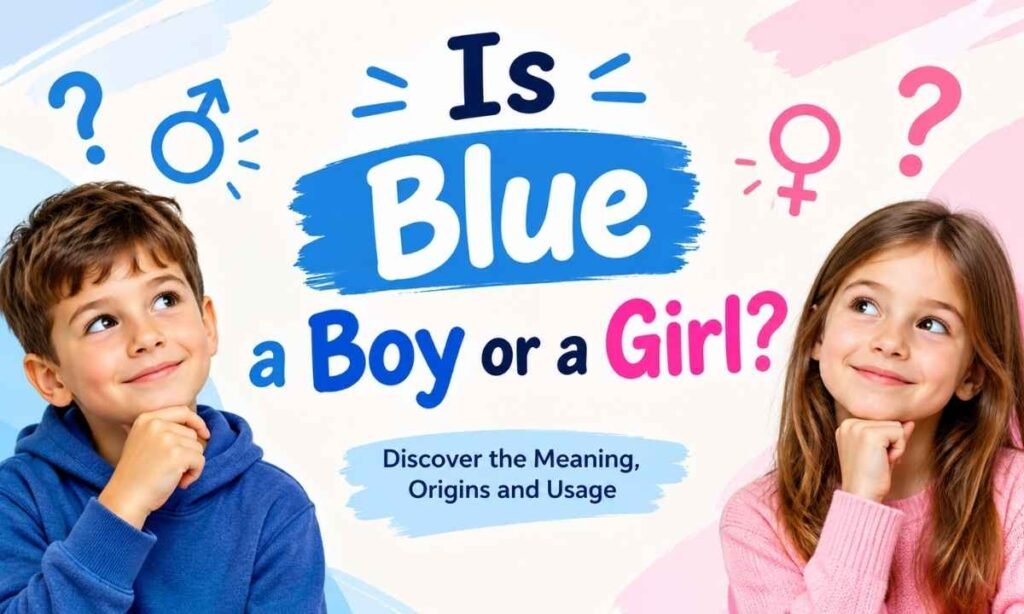
Blue is not a boy’s color or a girl’s color. It is simply a color that anyone can enjoy. In many Western cultures, blue has traditionally been associated with boys, but that link is a social habit, not a rule of nature. In this article, we look at where the idea came from, how it changed over time, and what modern research says about color preferences.
Is Blue a Boy or a Girl Color?
Blue is traditionally seen as a boy’s color in many Western countries, mainly because of baby clothes, toys, and marketing. Still, no color has a built-in gender. The quick comparison below answers the most common questions.
| Question | Short Answer |
| Is blue a boy’s color? | Traditionally associated with boys in many Western cultures. |
| Can blue be a girl’s color? | Yes, anyone can wear or prefer blue. |
| Is blue gender neutral? | Yes, blue itself has no inherent gender. |
| Why is blue linked to boys? | Cultural traditions, clothing choices, and marketing reinforced the association. |
| Was blue always for boys? | No. Historical color conventions have varied over time. |
Why Blue Is Commonly Associated With Boys
In the 20th century, many clothing makers and stores in Western countries began promoting blue for boys and pink for girls. Over the decades, parents, shops, and advertisers repeated the pattern until it felt natural. The association is strong today, but it is learned rather than biological.
Can Blue Be a Girl’s Color?
Absolutely. Girls and women wear blue every day, from denim to school uniforms to evening gowns. Blue is also one of the most frequently chosen favorite colors across genders, so it clearly does not belong to one group.
Is Blue Considered Gender Neutral?
Yes. Most designers and psychologists treat blue as a neutral color with calm, trustworthy, and peaceful meanings. This is why banks, hospitals, and tech brands use it so often, regardless of their audience.
Why Is Blue Associated With Boys?
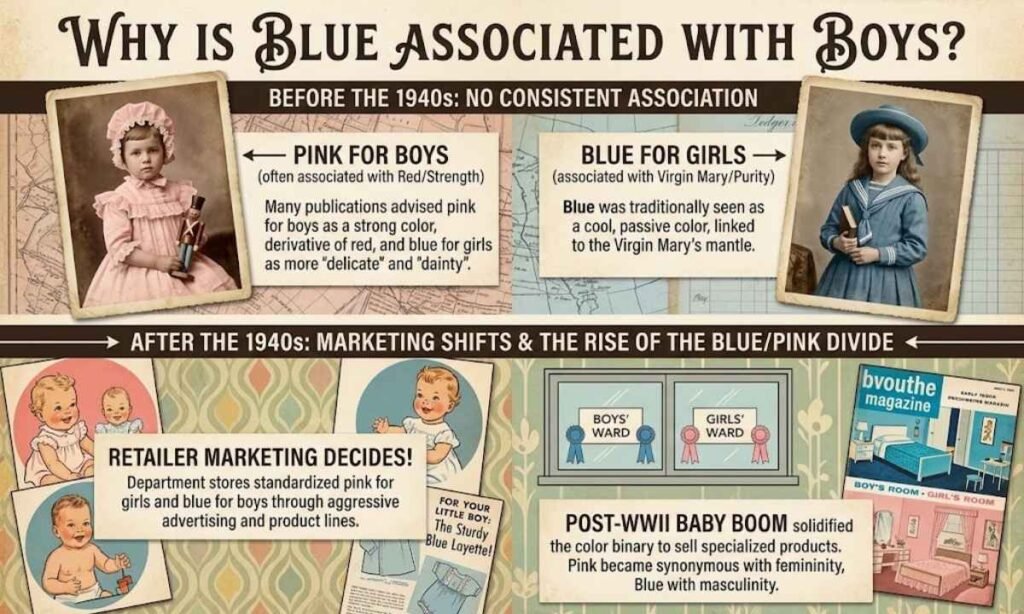
The link between blue and boys grew from a mix of fashion trends, commercial decisions, and cultural habits. No single event created it, which is why historians still debate the exact timeline.
How Clothing and Marketing Influenced Color Choices
As mass-produced children’s clothing grew, retailers looked for simple ways to organize products and boost sales. Separate color codes for boys and girls meant families often bought new items instead of reusing older ones. Brands continued to optimize their product lines around these color rules, which made the idea feel official.
The Role of Toys, Baby Clothes, and Cultural Traditions
Toy aisles, nursery décor, and baby shower themes all strengthened the blue-for-boys habit. Even small traditions, such as tying a blue ribbon on a gift for a newborn boy, kept the custom alive from one generation to the next.
Why Color Does Not Determine Gender
A color cannot decide who someone is. Gender identity and personal taste are separate things, and a child who loves blue is simply a child who loves blue. Treating colors as rules only limits choices without any real benefit.
Was Blue Always a Boy’s Color?
No. The history of blue and pink shows that these associations have shifted more than once, and sources do not always agree on exact dates.
Historical Views of Blue and Pink
In the early 1900s, some American trade publications suggested pink for boys because it was seen as a stronger color, and blue for girls because it was considered delicate. Other sources of the time recommended the opposite, so there was no universal rule.
How Gender Color Associations Changed Over Time
As fashion, advertising, and department store habits changed, the pink-for-girls and blue-for-boys pattern gradually became more common. Later in the century, marketing aimed at children made the split even sharper.
When Blue Became Commonly Associated With Boys
Most historians place this shift in the middle of the 20th century, with the pattern becoming very strong by the late 1900s. Because the change was gradual, it is safer to say “around the mid-1900s” than to point to one exact year.
Is Blue a Masculine or Feminine Color?
Blue is neither masculine nor feminine. Its meaning depends on culture, context, and personal experience.
What Blue Symbolizes in Different Cultures
In many cultures, blue stands for peace, trust, wisdom, and protection. In some places, it is linked to spirituality or royalty, and in others it is believed to ward off bad luck. None of these meanings is tied to gender.
Why People of All Genders Like Blue
Surveys of color preference often find blue to be a top favorite for both men and women. Researchers who are totaling results across large groups keep seeing the same thing: blue is popular with nearly everyone. A study in PLOS ONE that analyzed written texts also found no strong masculine bias for blue.
Does Your Favorite Color Say Anything About Your Gender?
No. Your favorite color reflects your taste, memories, and surroundings, not your gender. Someone can love blue, pink, green, or yellow without it saying anything about who they are.
Can Girls Wear Blue and Boys Wear Pink?
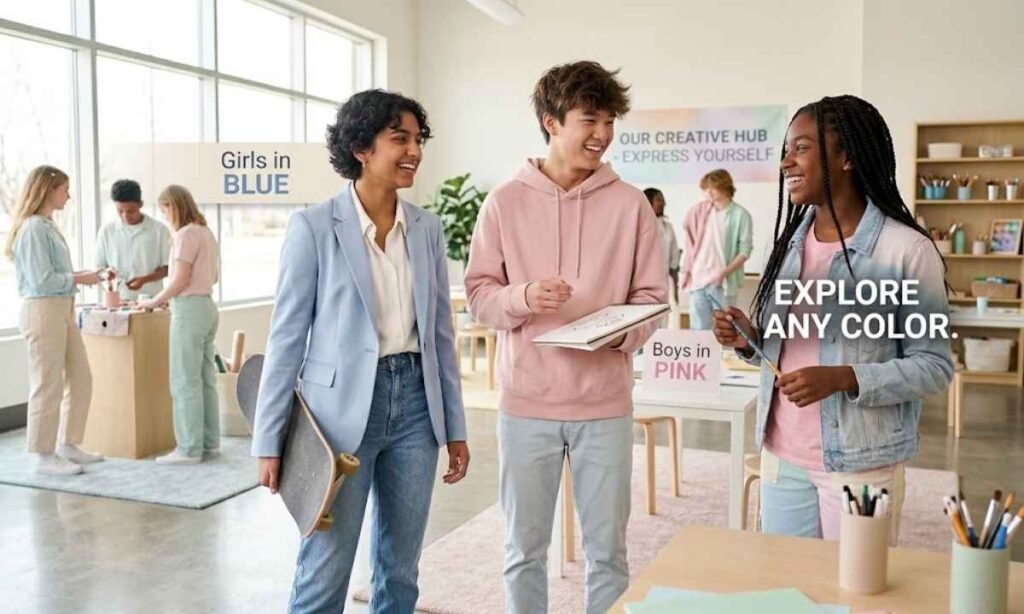
Yes. Anyone can wear any color. Clothing is for comfort and self-expression, not for following old color codes.
Choosing Baby Clothes Without Gender Rules
Pick clothes based on comfort, fabric, and fit. Soft cotton in yellow, green, gray, blue, or pink works for any baby. Many parents also prefer neutral outfits that can be reused by siblings, and a simple labeling system by size instead of gender makes shopping easier. Store staff or tools like a labeller or labeler can help families sort clothes by age, not color. When laundry day comes, tossing everything in the dryer together is much simpler if you have not separated clothes by color rules.
Blue and Pink in Modern Fashion and Design
Today, fashion runways, home décor, and brand design freely mix blue and pink. Gender-neutral collections are growing, and many shoppers now choose colors based on style instead of tradition.
Frequently Asked Questions
Is blue officially a boy’s color?
No, there is no official rule that makes blue a boy’s color. It is only a cultural tradition in many Western countries, and it can be ignored freely.
Can blue be a girl’s favorite color?
Yes, blue is a favorite color for many girls and women. Color preference comes from personal taste, not from gender.
Is blue a gender neutral color?
Yes, blue is gender neutral because the color itself has no gender. It is popular across all ages and genders worldwide.
Why is pink associated with girls?
Pink became linked to girls mainly through clothing trends and marketing in the 20th century. Before that, the association was not fixed and sometimes went the other way.
Was blue once considered a girl’s color?
Yes, in the early 1900s some publications suggested blue for girls and pink for boys. The rules were inconsistent and changed over time.
Does liking blue mean someone is masculine?
No, liking blue says nothing about a person’s masculinity or gender. It is just a personal color preference shared by people of all genders.
Conclusion
So, is blue a boy or a girl color? Blue is traditionally linked to boys in many Western cultures, but it has no real gender and never did. History shows these associations have changed, and modern research shows people of every gender enjoy blue. Wear it, decorate with it, and love it, whoever you are.