
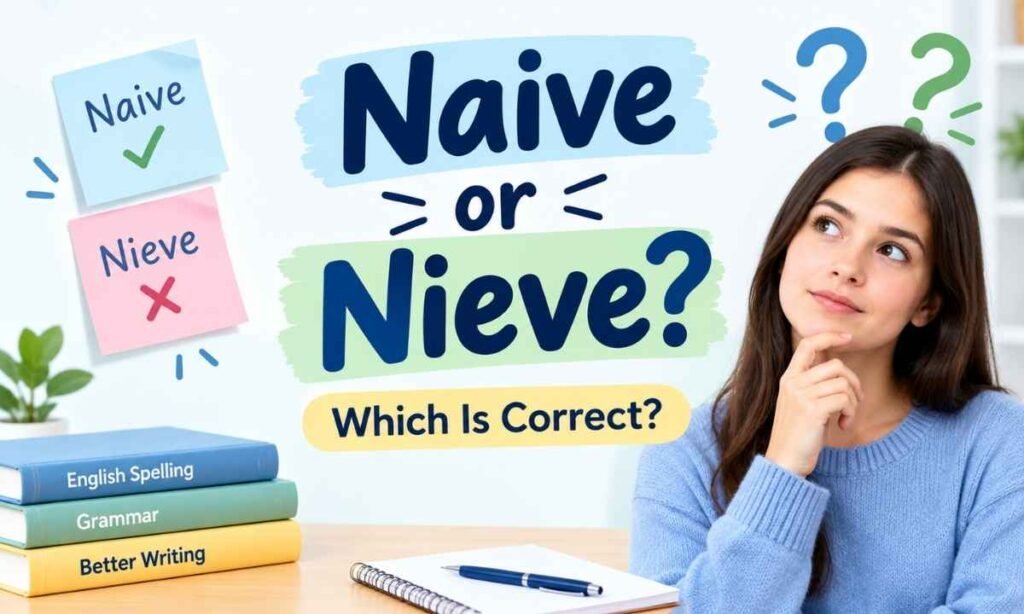
Many people pause when they write this word and wonder: naive or nieve? The correct spelling is naive, an adjective that describes someone inexperienced, innocent, or too trusting. You may also see naïve with two dots, which is an accepted alternative. “Nieve” is a common misspelling of the English adjective. In this guide, you will learn the meaning, pronunciation, examples, and synonyms, so you can spell it correctly every time.
Naive or Nieve: Which Spelling Is Correct?
For the English adjective, naive is the standard spelling. Nieve is not an accepted spelling of that word. The table below gives a quick answer.
| Word | Correct Usage | Meaning |
| Naive | Yes | Inexperienced, innocent, or overly trusting |
| Naïve | Yes | Alternative spelling of naive |
| Nieve | Not for this meaning | A separate word in other contexts; not the standard spelling of the adjective |
Why Naive Is the Correct Spelling
The word Naive or Nieve came into English from French. Its spelling follows the French form, in which the letters “a” and “i” sit together, followed by “v” and “e.” Major dictionaries such as Merriam-Webster and Cambridge list naive as the main entry, which is why it is the safe choice in any kind of writing.
Is Nieve Ever a Correct Word?
Not in English as a spelling of naive. Nieve does exist in other settings, for example as the Spanish word for snow and as a given name. In everyday English writing, though, it is simply a typo for naive.
Naive vs. Nieve at a Glance
A simple memory trick: naive starts with “na,” just like the word “native,” which comes from the same Latin root. If you can spell native, you can spell naive.
What Does Naive Mean?

Naive describes a person, idea, or action that shows a lack of experience, judgment, or suspicion.
Naive as an Adjective
Naive is an adjective, so it describes nouns, such as a naive student, a naive plan, or a naive belief. The related noun forms are naivety and naiveté, both of which mean the quality of being naive.
How Naive Is Used in Everyday English
People use naive when someone trusts too easily or expects things to be simpler than they are. For example, “It was naive to think the project would finish without any delays.”
Is Naive a Positive or Negative Word?
It is usually mildly negative, since it suggests a lack of experience. However, it can also be gentle or even sweet when describing children or a simple, innocent view of the world. Tone and context decide how it sounds.
What Does Nieve Mean?
Nieve is not a standard English word, so it has no English meaning of its own. Its role depends on the language or context in which it appears.
Nieve as a Spelling Mistake
Most of the time, nieve shows up because someone tried to spell naive by sound. Because the word is pronounced “nah-EEV,” the “ie” pattern in words like piece or believe can seem logical, but it is wrong here.
Does Nieve Have a Meaning in Spanish?
Yes. In Spanish, nieve means snow. It is a real word with a clear meaning, but it has no connection to the English adjective naive.
The Difference Between Nieve and Naive
Naive is an English adjective meaning inexperienced or trusting. Nieve is a Spanish noun meaning snow, and it is also used as a name. They sound a little similar to some ears, but they are entirely different words.
Naive vs. Naïve: Are Both Spellings Correct?
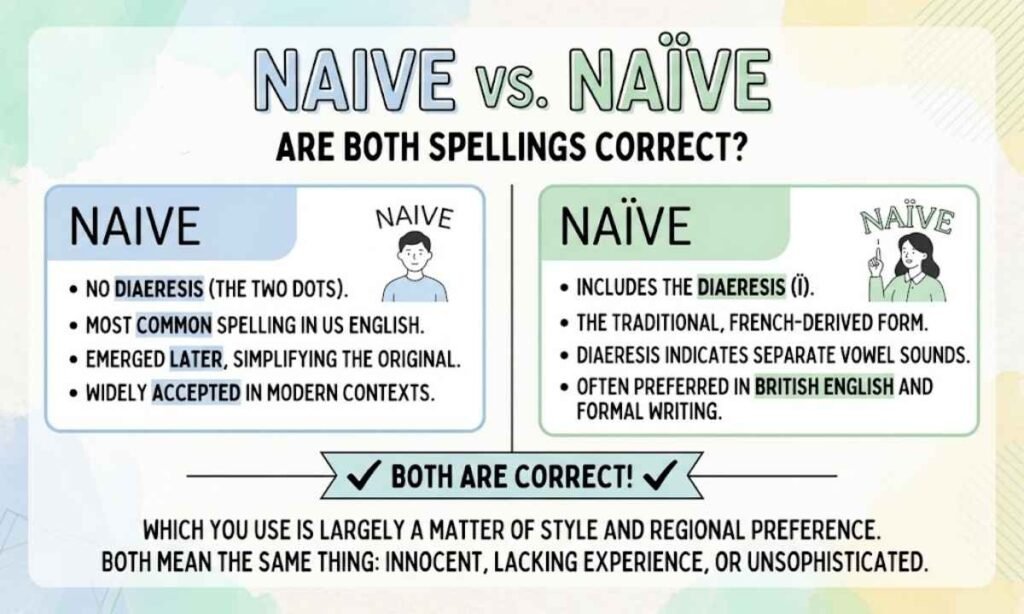
Yes, Naive or Nieve are correct. They are the same word, and the only difference is the use of a diacritic mark.
What the Two Dots in Naïve Mean
The two dots are called a diaeresis. They show that the “a” and “i” are pronounced as separate sounds, not as one. This mark was kept from the original French spelling.
Which Spelling Is More Common in American English?
In American English, naive without the dots is more common, especially in everyday writing, news, and online content. Naïve appears more often in formal, academic, or stylistic writing.
When to Use Naive or Naïve in Formal Writing
Choose one spelling and use it consistently throughout your document. If your school, publisher, or company follows a style guide, follow its preference. When there is no guide, naive is the simplest choice for US readers.
How to Use Naive in a Sentence
The examples below show how the word works in different situations.
Examples of Naive in Everyday Conversations
- “I was naive to believe the first offer was the best one.”
- “She is a bit naive about how expensive city life can be.”
- “Don’t be so naive, not every message online is true.”
Examples of Naive in Academic and Professional Writing
- “The study criticized the naive assumption that all participants behave the same way.”
- “A naive approach to budgeting can lead to unexpected costs.”
- “The manager warned that a naive forecast would put the team at risk.”
Common Spelling Mistakes to Avoid
Besides nieve, writers also type “naiv,” “naeve,” and “naive” with the wrong vowel order. Spelling mix-ups are common with many English words. For example, you might also wonder about tying or tieing, where the ending changes with the verb form. Reading the word aloud and checking a dictionary will catch most errors.
How to Pronounce Naive
Naive is pronounced “nah-EEV,” with the stress on the second syllable.
Naive Pronunciation in American English
In American English, the first syllable sounds like “nigh” or “nah,” and the second like “eev.” Say it slowly as nah-EEV, then speed up until it sounds natural.
Why Naive and Nieve Are Easily Confused
Both words sound close when spoken, and the “ie” pattern is familiar from many English words. Since the correct spelling is less common, it is easy to guess the wrong letter order. Practice with the word native to remember the “na” start.
Synonyms for Naive
These words are close in meaning to naive, but each has its own shade.
Innocent vs. Naive
Innocent suggests a lack of guilt or harmful intent, while naive points to a lack of experience. A child can be innocent and naive, but an experienced adult can also be innocent without being naive.
Gullible vs. Naive
Gullible means easily tricked or fooled, and it is usually more critical. Naive is a softer word that describes a lack of experience, not just being easy to deceive.
Inexperienced vs. Naive
Inexperienced simply means not having practice in something. Naive adds the idea of trusting too much or seeing things too simply.
Frequently Asked Questions
Is it naive or nieve?
The correct spelling is naive. Nieve is a misspelling of the English adjective.
Is nieve a real English word?
No, nieve is not a standard English word. It is a Spanish word meaning snow, and it is also used as a name.
Is naïve the same as naive?
Yes, both spellings mean the same thing. Naïve just keeps the French two-dot mark.
How do you spell naive correctly?
Spell it N-A-I-V-E. Remember it by thinking of the word native.
What is the plural of naive?
Naive is an adjective, so it has no plural form. To talk about the quality, use the noun naivety or naiveté.
What is a better word than naive?
Try innocent, inexperienced, trusting, or unsuspecting, depending on your meaning. Choose gullible only when you want a stronger, more critical tone.
Is naive British or American English?
Naive is used in both British and American English with the same spelling. Unlike spelling pairs such as labelling or labeling, optimize or optimise, or totalling or totaling, naive does not change between the two.
Conclusion
So, naive or nieve? The correct spelling is naive, and naïve is an accepted variant with the same meaning. Nieve is only a misspelling in English, although it is a real word in Spanish meaning snow. If you are unsure, remember that naive starts with “na,” just like native. Keep checking tricky spellings, such as labeller or labeler or drier or dryer, and your writing will stay clear and confident.